A PPC Lab INJURY Story
by Dr. Chad Peters
The Athlete
Lucas is a sixth grader.
He plays soccer.
He plays baseball.
The seasons overlap.
Which means one thing most parents miss at first.
He’s almost always in cleats.
What the Pain Looks Like
The pain shows up in his heel.
Some days it’s manageable.
Other days it’s bad enough that running doesn’t feel right.
Soccer becomes miserable.
Baseball feels off.
And walking around school can even be uncomfortable.
Eventually, someone mentions the name.
Sever’s.
Why Cleats Get Blamed
This is where parents usually land first.
“It must be the cleats.”
And while cleats are not the cause, they are often a complicating factor.
Switching shoes doesn’t magically fix the problem.
But staying in rigid cleats while the heel is irritated can keep poking the bear.
In my own coaching and clinical world, when a kid is far enough along in rehab to probably play, I’ll often shift them temporarily into turf shoes.
Not because cleats are evil.
But because they tend to re-exacerbate symptoms.
That nuance matters.
When Fear Creeps In
Lucas eventually has to sit out soccer for a stretch.
That’s when the anxiety shows up.
His parents were both college soccer players.
They start thinking ahead.
-
“Is he falling behind?”
-
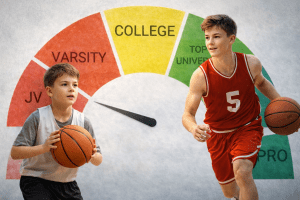
“Will he miss varsity later?”
-
“Is this going to derail everything?”
This is where Sever’s stops being a heel issue and starts becoming a future-story problem.
The Perspective Shift
During one visit, someone asks a simple question:
“Did you have this stuff when you were younger?”
Both parents pause.
Then they laugh.
Yes.
They both did.
On and off heel pain.
Middle school years.
And they had completely forgotten about it.
That moment changes the temperature in the room.
Why This Isn’t an All-or-Nothing Injury
Sever’s, like Osgood-Schlatter’s, is not binary.
It’s not:
-
Play forever or shut it down completely
It’s a management injury.
There are phases:
-
Times where rest is non-negotiable
-
Times where modification works
-
Times where position, shoes, or practice volume change
-
Times where coaches just need awareness
The goal isn’t perfection.
The goal is keeping kids in sports when possible, and protecting them when necessary.
What Management Actually Looks Like
For Lucas, that meant:
-
Taking breaks when symptoms peaked
-
Modifying footwear during flare-ups
-
Adjusting expectations week to week
-
Not panicking when pain returned
It wasn’t perfect.
It was realistic.
The Outcome
Lucas managed this through middle school.
The pain came and went.
Then slowly… it stopped mattering.
By high school:
-
He barely remembered having heel pain
-
He played freely
-
He had a successful athletic career
Much like his parents.
The PPC Lab Takeaway
-
Cleats aren’t the cause, but they can be a stress multiplier
-
Sever’s comes in phases, not permanent outcomes
-
Fear about the future often causes more damage than the condition
-
Smart modification beats unnecessary shutdown
Growth-related injuries don’t mean the end of sports.
They mean the beginning of better management.
Want a Deeper Dive?
If you want a deeper dive into this type of injury, you can read more here:
https://sportsdocdc.com/severs24/