It’s not a disease. It’s a heel that’s growing and screaming for attention.
Let’s clear something up right away:
Sever’s isn’t a disease.
It’s a real, painful, but very common condition in growing athletes — especially those who run, jump, or play high-volume sports while going through a growth spurt.
But calling it a disease?
C’mon, man. We can do better than that.
It’s not an illness. It’s not something to fear. And it’s not a reason to shut down an athletic future before it even starts.
📍 What’s Actually Happening?
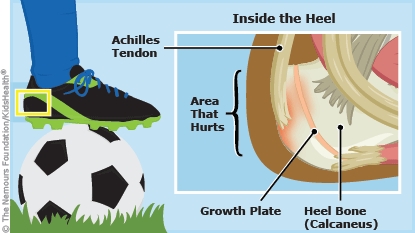
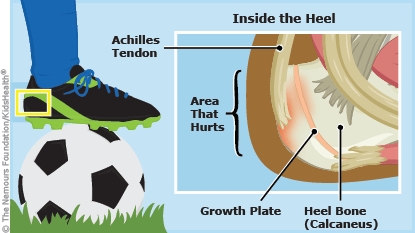
Sever’s shows up when the Achilles tendon pulls too strongly on the growth plate at the back of the heel — specifically, the calcaneal apophysis.
That growth plate isn’t solid bone yet.
It’s cartilage, still developing and organizing. And when too much repetitive load hits it — think running, sprinting, and jumping — the bone can’t fully absorb it.
The result?
-
Pain
-
Swelling
-
A sharp “pinpoint” spot at the heel
-
And sometimes, a very real limp
🧠 The “Disease” Problem
Let’s talk about this labeling issue.
When a provider calls this a “disease,” it makes kids — and their parents — panic.
That word implies:
-
Something internal
-
Something lifelong
-
Something scary
And that’s not what this is.
This is a mechanical overload at a growth plate — not a medical emergency.
It’s temporary. It’s manageable. And it’s something young athletes go through all the time.
⚽ When It Often Starts: Cleats + Growth Spurts
Most of the cases I see start when:
-
A growth spurt hits
-
Cleat season begins
Softball, baseball, football, and soccer players are especially prone — cleats reduce shock absorption and increase heel tension with every step.
Add hard fields, poor warmups, and weekly tournaments?
The heel taps out fast.
🏀 The Personal Story
I’ve treated this up close — in my clinic and in my own family.
My daughter went through this during a big growth phase.
It hurt. It lingered. And it looked scarier than it actually was.
But as both her dad and her doctor, I made sure she knew:
-
This isn’t permanent
-
You don’t need surgery
-
You’re not broken
-
And yes, you will absolutely play again
That reassurance matters.
Because when a kid hears “disease,” they think “am I done?”
The answer is no.
You’re not done. You’re just in a chapter.
🧨 This Can Get Bad — Respect It
Let’s be clear. This isn’t always mild.
Some Sever’s cases are quick and pass in two weeks.
Others turn into major issues, especially in athletes who never slow down or who try to hide the limp.
I’ve seen athletes:
-
Unable to walk across the room
-
Limp through an entire tournament
-
Miss weeks of school PE because no one took it seriously
In these cases?
You need to shut it down.
Let the growth plate cool off. Let the system regroup.
Not forever — not a full year.
A year off is almost always overkill.
But ignoring it entirely? That’s just as reckless.
Just like ankle sprains, this comes in degrees.
You treat it with nuance — not extremes.
And one golden rule applies:
Don’t mess around with growth plates.
These are foundational structures in a young body. Respect them.
🔍 What Makes This Tough
It’s sneaky. It shows up as:
-
A heel that “burns” after practice
-
A sharp jab when the foot first hits the floor in the morning
-
A tight Achilles that never quite loosens up
-
A kid who suddenly limps or runs differently
It’s not a dramatic injury.
But it’s a huge disruptor if you don’t handle it right.
🛠️ What Actually Helps
There’s no single fix — but there is a smart way forward:
✅ Adjust Activity
-
Pull back from sprinting, jumping, and hard cutting
-
Use heel lifts in shoes to temporarily reduce strain
-
Avoid barefoot or flat shoes during flare-ups
✅ Treat the Whole Chain
It’s not just the heel. Look at:
-
Achilles tension
-
Calf mobility
-
Glute control
-
Foot strength
-
Ankle rhythm
The heel is just where the stress shows up. It’s not the full story.
✅ Adjustments + Decompression
Getting the foot and ankle joints moving well can relieve excess stress.
Targeted decompression (like cupping or fascia glides) may help if tension is building in the soft tissues around the site.
Chiropractic adjustments and foot taping can often restore symmetry and ease that deep tension.
🧬 Final Takeaway
Sever’s hurts.
It’s real.
And sometimes, yes — it can shut an athlete down.
But with the right approach? It won’t last.
Clear the inflammation. Fix the mechanics. Support the athlete.
And make sure they know:
This is part of the process — not the end of the story.
It’s the future. Understanding and treatment have changed significantly. This entire website is built to keep you modern.
Stop calling it a disease. Start treating it like what it is — a growth phase that needs coaching, and TLC, not panic.