I
I’m a Chiropractor
(But Probably Not the Kind Your Grandpa Envisioned)
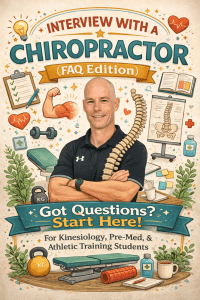
I’m a chiropractor, but probably not the kind your grandpa envisioned.
I don’t base my entire practice on “alignments” and forceful manipulations. I do them. I value them. But they are not my philosophy of the body.
They are a part of what I do — not the whole story.
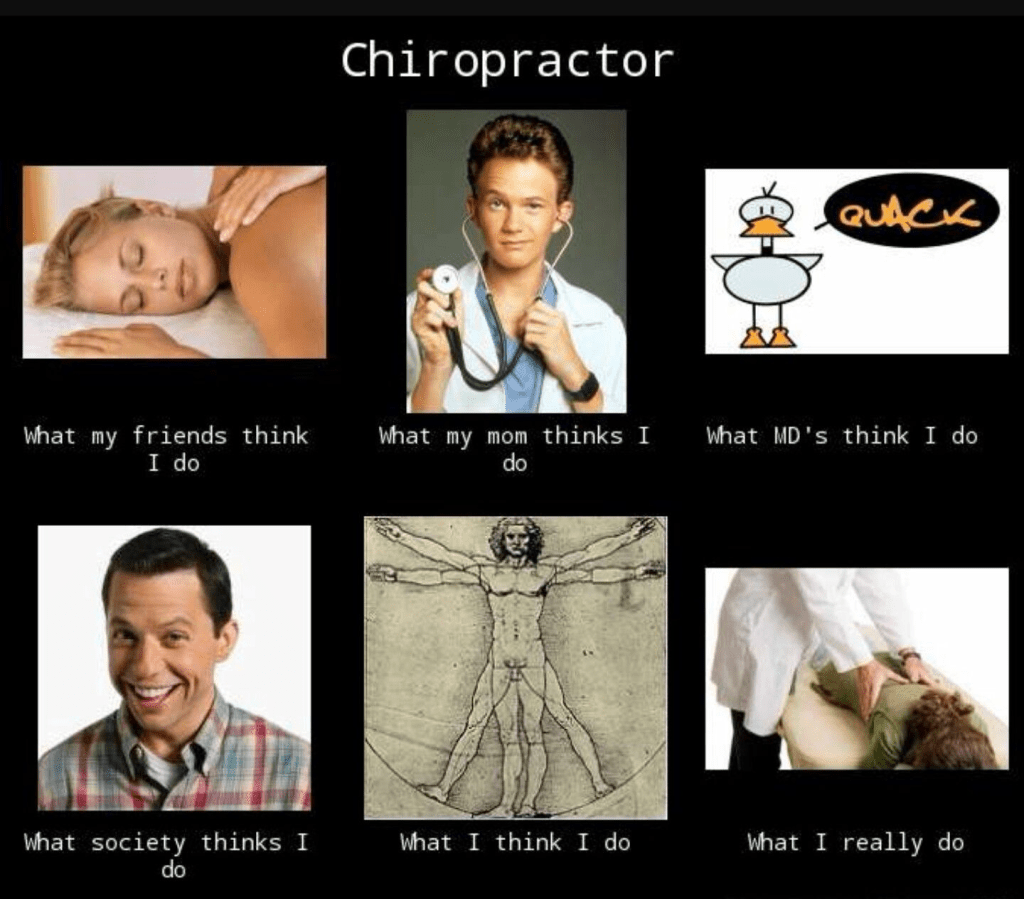
Lately, I’ve realized I need to clarify this. Public perception of chiropractic is outdated, and that disconnect creates confusion for patients and even other healthcare professionals.
This isn’t unique to me. Almost every evolving profession goes through an identity crisis at some point. This article is my attempt to explain what I do, who I help best, and why the word chiropractor doesn’t always tell the full story anymore.
The “Chiropractic” Search Problem
Chiropractic is changing — fast.
What used to feel like a unified profession has diversified into multiple tracks, much like medicine did generations ago.
Think back to how your grandparents talked about doctors. One doctor. One bag. One shiny head mirror. They handled broken bones, sickness, childbirth, infections — everything.
Today, that sounds absurd.
We now have cardiologists, orthopedists, neurologists, OB/GYNs, sports medicine physicians, and countless subspecialties.
Chiropractic is undergoing that same evolution, just without clearly defined public titles yet.
That creates a problem.
Searching “chiropractor” online is a lot like searching “doctor.” It doesn’t tell you what kind of care you’re actually getting.
Even within the profession, we haven’t done a great job labeling ourselves clearly — which leaves patients guessing.
My Wheelhouse: Sports Performance and Movement
My focus is sports medicine, movement, and performance.
My background as a personal trainer heavily influences how I practice. A typical visit in my clinic doesn’t start with a table and a “pop.”
It starts with evaluation.
Every Visit Includes:
-
Exams first — always
-
Movement assessment to see how your body actually functions
-
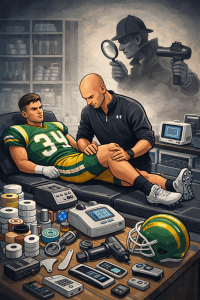
Muscle and soft tissue work to address restrictions and imbalances
-
Chiropractic techniques — but not how most people expect
I don’t chase “alignment.”
I use chiropractic work as a tool to optimize mechanics so the body can heal and perform better.
Think less fixing something broken and more tuning a high-performance engine.
At my core, I’m a movement specialist.
With athletes, I often treat bodies that aren’t injured at all — just inefficient. The approach is similar to a race mechanic prepping a car that already runs well, but could run better.
That philosophy boils down to what I call The Three Big Engines:
-
The hip
-
The ankle
-
The shoulder
In my experience, 99% of musculoskeletal issues trace back to one or more of these engines not doing their job properly.
Where I Actually Fit Best
If I’m being honest, my ideal role wouldn’t even be traditional private practice.
My best fit would be as a medical director for a sports team or large organization — conducting initial evaluations, identifying bottlenecks, and directing people to the right specialist.
Sometimes that’s me.
Other times it’s:
-
An orthopedist
-
A physical therapist
-
Another chiropractor
-
A massage therapist
-
A personal trainer
-
Or even a coach
The value isn’t in doing everything.
The value is in knowing where someone belongs next.
The “Pop” Problem
The biggest misconception I deal with is the expectation that one quick “pop” will fix everything.
I’m not anti-adjustment.
I’m anti-magic thinking.
A pop can feel great. It can reduce pain. It can restore motion temporarily. But it does not automatically fix the underlying issue.
It’s not my primary tool, and it’s definitely not a cure-all.
My approach is more comprehensive. It usually requires:
-
Multiple visits
-
Active rehab
-
Buy-in from the patient
That also means I have a responsibility to:
-
Be honest about limitations
-
Educate patients about realistic timelines
-
Refer out when my approach isn’t the best fit
Chiropractic Is Splitting — And That’s a Good Thing
Chiropractic is in a transitional phase.
While formal specialties aren’t universally recognized yet, the profession is naturally dividing into distinct lanes, including:
-
Traditional “straight” chiropractic
-
Sports medicine and performance-based care
-
Personal injury and work comp
-
Pregnancy and women’s health
-
Pediatrics
-
Geriatrics
-
Fascia and deep tissue specialists
-
Massage-integrated practices
-
Nutrition-focused practices
-
Neurology-focused practices
-
Rehabilitation-heavy practices
This diversification is a positive development.
It allows practitioners to go deeper instead of wider. But it also creates confusion for the public.
Just like you wouldn’t ask your OB/GYN about shoulder pain, it doesn’t make sense to assume every chiropractor practices the same way.
Finding the Right Fit
Today, it’s less about the label and more about the practice style.
Skill sets now overlap across professions. Physical therapists, chiropractors, trainers, and massage therapists often share tools — but use them very differently.
You’re not looking for who can do the treatment.
You’re looking for who does.
That distinction matters.
My goal is always to help people land in the right place — even if that place isn’t my clinic.
If this article helped clarify the landscape, good. And if you want to dig deeper into navigating healthcare decisions, you may also find my article “How to Avoid Your Doctor (Including Me!)” useful.
Because sometimes the best care I can give…
is pointing you in the right direction.

Gemini can make mistakes, so double-check it