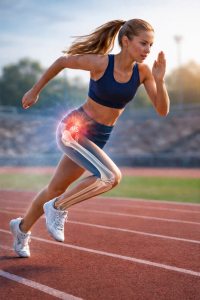
💥The Real Issue Behind Runner’s Knee, Jumper’s Knee, and Patellar Tracking Pain
We treat a ton of knee pain in our clinic — and the surprising truth?
Most of it isn’t about your knee.
If you’ve been told you have:
-
🏃♀️ Runner’s Knee (Patellofemoral Pain Syndrome)
-
🏀 Jumper’s Knee (Patellar Tendonitis)
-
🦵 Patellar Tracking Issues
-
🧊 Chondromalacia (Cartilage Softening)
…it’s time to stop obsessing over the diagnosis and start looking at the real reason behind the pain.
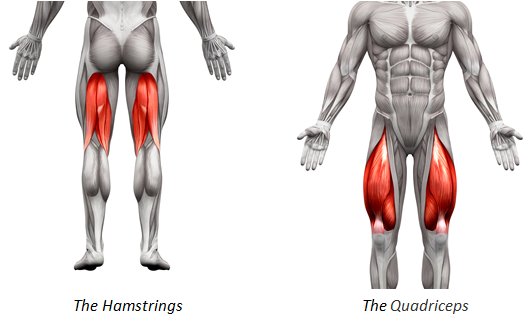
🔎 The Hidden Pattern: Quad-Dominance + Poor Posterior Chain
Here’s the deal:
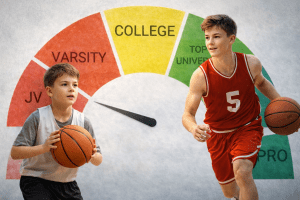
Athletes — especially youth and high schoolers — grow fast and quad-heavy.
Their strength curve tilts forward. Their glutes and hamstrings can’t keep up.
This leads to what we call a movement imbalance.
Common Clues:
-
“Tight” hamstrings that never loosen up, no matter how much you stretch.
-
Tibia or shin soreness just below the kneecap.
-
Pain flares after long runs, jumping, or stairs.
-
Knees ache even after resting.
Sound familiar?
You’re not broken — you’re just unbalanced.
🎯 Clinical Insight: It’s a Complex, Not a Tear
This isn’t a torn ligament.
This isn’t an MRI moment.
This is a muscle activation problem — plain and simple.
Your body is over-relying on the quads and hip flexors, when what you really need is glutes and hamstrings.
The ratio is off — and pain is the signal.
We see this ALL the time in clinic, especially in:
-
🔄 Multi-sport athletes
-
🏃 Runners
-
🏀 Basketball and volleyball players
-
🎽 Young athletes going through growth spurts
🛠️ Fix the ratio, fix the pain.
This is a training issue, not a structural flaw.
🛠️ Your Fix-It Plan: Restore the Balance
Let’s cut to the chase. Here’s what actually works:
Step 1: Calm the Fire
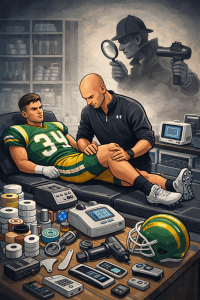
Use ice on the tibial tubercle and the patellar tendon — the area that runs above, below, and completely surrounds the kneecap.
This is often the tissue being pulled tight and irritated.
Calming it down is step one — no exceptions.
Step 2: Get the System Moving Correctly
Mobility before muscle work.
Unlock your hips and ankles — they’re the engines of lower-body movement.
Nothing downstream will fix until these start firing smoothly.
Step 3: Activate First, Stretch Second
Stop defaulting to stretching.
Your body needs to know how to fire the right muscles.
Begin every session or recovery window with:
-
✅ Hip bridges
-
✅ Heels-on-box holds
-
✅ Mini-band glute activators
Once activated, then stretch. The order matters.
Step 4: Hammer the Posterior Chain
This subtle but effective shift seals the deal.
Posterior chain (glutes, hamstrings, calves) is the counterbalance to your quad dominance.
Neglect it and the problem sticks around. Own it and the system stabilizes.
🧠 Big Picture: Don’t Treat the Symptom, Treat the System
Your diagnosis (runner’s knee, jumper’s knee, chondromalacia…)
Isn’t the cause.
It’s the label for what happens when imbalance wins.
What we actually need to fix:
-
🧠 Brain-to-muscle activation
-
🔁 Movement sequencing
-
🧱 Restoring the back side of the chain
This is how we treat it in clinic.
This is how athletes actually heal — and come back better.
🔄 Your Reminder: Function First, Then Performance
We don’t chase pain.
We restore function.
If you’re stuck in a cycle of flare-ups, braces, and disappointment… this is your way out.
Start rebuilding the chain.
Start from the back.
Start with activation.