-
The 15-Year-Old Soccer Player
Earlier this morning, a 15-year-old female soccer player came into my clinic.
State playoffs were around the corner, and she had just rolled her ankle—classic low-grade sprain, probably the most common injury in sports medicine.
My treatment was straightforward and please, before you think I’m working old school, get this point – this is not a return to play type workup – this is a “Day 1” ACUTE INJURY exam and eval. workup. An initial “Put the FIRE out” workup. Here’s how it went down –
-
-
A gentle, non-painful adjustment to reset the joint
-
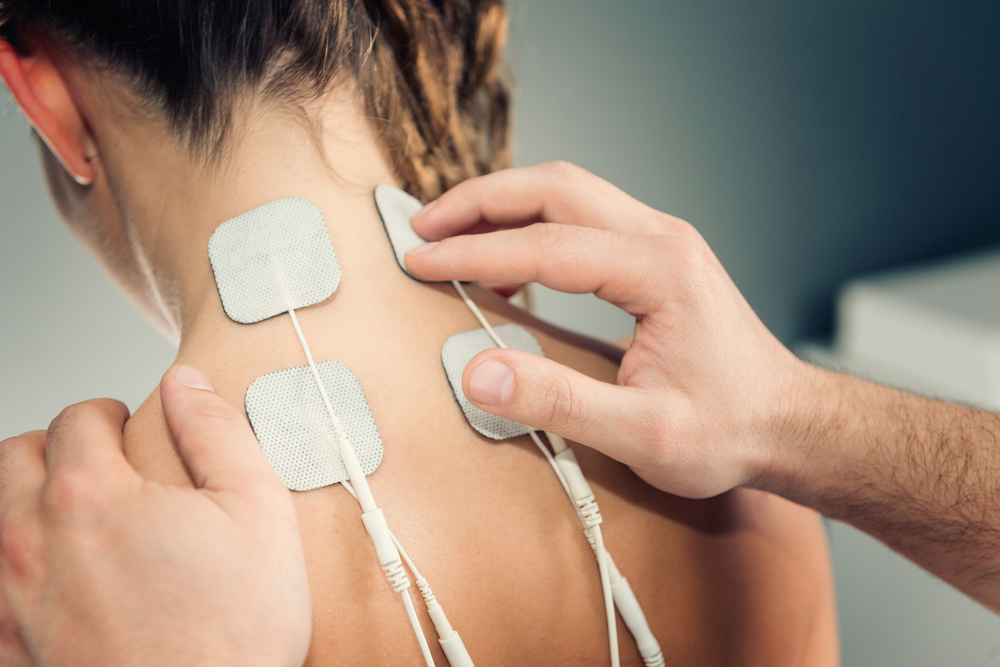
And one tool many people wrongly consider outdated: electric muscle stimulation (EMS)
Specifically, I used Russian stimulation, one of eight EMS modes available on my machine.
-
Why? Because I wasn’t just treating her pain—I was working to quiet her threat response and rebuild her body map.
If you think ice and EMS are “old school,” this article is for you. I’m not interested in defending legacy treatments—I’m interested in what works faster and better in real-life recovery.
Didn’t I hear some Research that said EMS Doesn’t Work?
Possibly… but not really. Here’s the full sentence:
“EMS doesn’t work the way we thought it did years ago.”
That changes everything. When we understand the actual mechanism behind EMS, it becomes one of the most efficient and underrated tools we have—especially when paired with ice, tape, and hands-on treatment in the acute stage of injury.
-
It’s not making the muscles twitch back and forth to make them grow faster.
-
It’s not shocking the system to make the muscle heal faster.
-
It’s not outdated and old fashioned.
-
Much more it’s along the lines of:
- It feels great.
- It allows the brain to get better and more detailed information.
- It is calming and passive – something extra that doesn’t cost you time or energy.
- One last idea – with over 20 years of clinical evidence on my side, the clients that use the Stim vs the ones that don’t – see me less sessions. It just works!
Body Mapping: How the Brain Sees the Body
To understand EMS, we first have to talk about body mapping—how your brain tracks and manages your body in space.
Your skin and superficial fascia act like a GPS network, constantly feeding the brain information about movement, touch, pressure, temperature, and threat. The more accurate the signal, the better your brain can regulate pain, inflammation, and mobility.
Think of an old phone trying to load Google Maps on 3G—everything’s pixelated and laggy. That’s what happens when your nervous system loses contact with an injured area. EMS helps restore that signal.
What Tape Teaches Us About EMS
Let’s start with a tool more widely accepted in modern sports medicine: kinesiology tape (RockTape, K-Tape, Kinesio Tape).
It works primarily, not because it magically lifts tissue or drains lymph, but because it stimulates mechanoreceptors—nerve endings that respond to touch, stretch, and movement. This boosts brain-body communication and can “reset” the perceived threat in the area.EMS works on the same principle.
The light electrical stimulation of EMS pads—especially in the 5-second on, 5-second off rhythm of Russian stimulation—sends consistent, non-threatening input to the brain. This helps reduce pain, calm the threat response, and re-establish a clean body map.
It’s not about “zapping” a muscle. It’s about talking to the nervous system.
Why EMS Still Deserves a Place in Your Toolkit
Let’s break down how and why EMS works—with a modern lens:
✅ Pain Modulation: Calming the System
EMS gives the brain something else to pay attention to. The gentle pulses flood the area with non-threatening input, overriding pain signals and resetting the nervous system’s perception of injury. On this. TENS is a type of EMS, not encompassing of all types. TENS is still the best for pain modification but works differently then what we use clinically – sure you may have a doc say, “Yes, the TENS.” But that’s only because they are sick of explaining it every time. TENS is a part of EMS, as is Russian, micro, HiVolt, Interferential and a few others and each has their own strength. Good practitioners use them differently, despite the fact that they all feel rather similar.
✅ Passive Therapy = Efficient Therapy
Busy clinic? EMS lets you multitask without compromising care. Set the rhythm, check positioning, and let the system do its job while you tend to another patient.
✅ Athlete Buy-In
Most athletes find EMS comfortable—even enjoyable—when you don’t crank the intensity too high. That means better compliance and more consistent results.
✅ Versatility Beyond TENS
EMS is not just TENS.
TENS focuses solely on blocking pain.
Russian stimulation, on the other hand, supports muscle re-education, blood flow, and proprioceptive awareness. I use it in nearly every injury scenario—paired with tape, manual therapy, and movement.
So Why the Skepticism?
Just like the ice vs. heat debate, critics often base their dismissal on outdated assumptions about mechanism—not outcomes. If your only question is “does EMS contract muscle tissue deeply,” you’re missing the point.
The point is this:
EMS helps the brain recalibrate. It reduces threat. It speeds up functional return.
And it works—if you understand how to use it.
Final Thoughts: Rethinking “Old” Tools with New Insight
If you’re a practitioner stuck in the “EMS is outdated” mindset, it’s time to reconsider.
-
EMS is efficient.
-
EMS is neurologically relevant.
-
EMS improves real-world outcomes.
Just like ice has regained credibility thanks to our evolving understanding of the threat response, EMS deserves its revival through the lens of modern neuroscience and clinical results
-