- this excerpt is taken from Chapter 7 of my new Performance Book for high school coaches – coming spring 2025!
Tissue Tolerance:
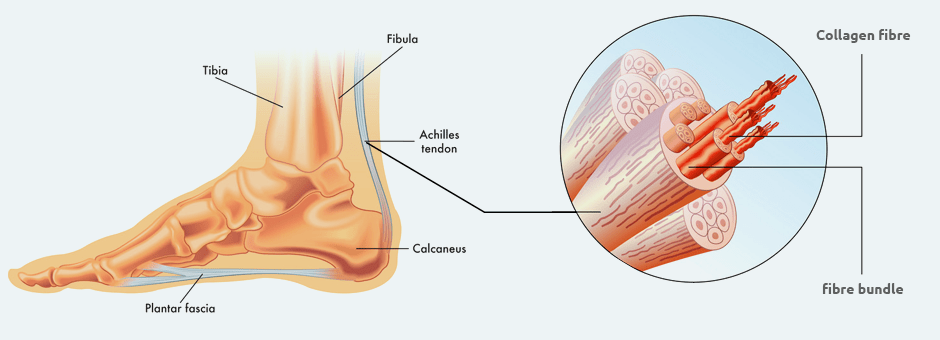
Tissue Tolerance refers to the fact that muscles tend to grow/repair/improve at a faster rate than tendons and ligaments. Consequently, tendons and ligaments require more time to build up a tolerance to the demands placed on them.
The body does not improve at the same rate across all systems, particularly connective tissues (ligaments, tendons, fascia), which respond and improve differently compared to cardiovascular output, mental strength, and maximum VO2.
For example, consider a cross-country runner who begins the season running a mile time trial at a 5-minute pace without difficulty. That’s an excellent start! Any cross-country coach would be excited and expect that, over the following weeks, they could gradually increase both the pace and distance.
However, suppose there are issues with tissue tolerance. In that case, the expected improvements throughout the season in VO2, muscle strength, raw speed, and confidence/mindset may not be equaled in the connective tissue, as the tendons and ligaments might struggle to handle the increased demands, potentially leading to breakdowns.
“This kid isn’t performing like we thought she would.”
While the athlete may not be injured yet, they are not performing at their optimal level. Common issues such as Achilles problems, shin splints, and hip pain can emerge, hindering an athlete with great potential from reaching their maximum capability. But most likely, NOTHING will be found. There won’t be an injury, they just are “sub-optimal.”
In performance conversations, these concerns can be referred to in various ways, such as a “bleed out,” “leak,” “dysfunction,” or “sub-optimal issue.” Pick your term!
The problem is – if your team runs black and white, as in “You are either injured or 100%” this doesn’t pan out well at the regionals and state meets. This is where we want to peak.
Again, it’s a “why.”
It’s essential for high-level cross-country coaches to understand this concept, especially in distance running. As a result of this new concept and term, “tissue tolerance,” more focus is being placed on recovery and bodywork to address these issues than ever before in the history of running. This is why more direct training to accelerate tissue tolerance is being done as “pre-hab” at the top universities and pro facilities. The concept affects how and why they practice as well.
It’s also why more world records and mind-blowing performances keep showing up.
It’s the modern loop. Sports medicine positively impacts athletic performance, shaping the future of sports medicine over and over. Different applications from other fields impact performance.