The Back Story
One of my recent patients, a 29-year-old housekeeper, came to me with a nagging shoulder issue. For weeks, she had been dealing with pain after work. Scrubbing floors and cleaning bathrooms every day had taken a toll, and every night she came home sore.
When she arrived in my office, I conducted a thorough orthopedic examination. Despite some mild finding, she was fit, healthy, and strong. She passed the tests.
I applied one of my standard and common shoulder treatments, the bicep tendon complex.
It’s something I’ve used successfully for years, and by the end of her first visit, she felt noticeably better.
A few days later, though, the pain was back. That’s typical for this complex and expected.. Most of these shoulder issues require at least two visits to make a difference. But after her second treatment, the pain hadn’t changed.
It wasn’t worse, but it wasn’t better either.
Now let me be clear. I don’t give up on injuries after two visits. Almost nothing in performance care resolves that quickly. But in this case, her shoulder wasn’t responding the way I’ve seen hundreds of others respond.
That matters to me. That told me something else might be going on.
We agreed to order x-rays. Her results came back the next day, and they were perfect.
No structural damage, no red flags. Her shoulders looked healthy and strong. As expected.
She didn’t return after that second visit. The treatment hadn’t worked, and understandably, she wasn’t satisfied. But a few weeks later, she called me. The pain was still there. No better, no worse. Her medical doctor had suggested it might be a minor to moderate labrum tear and advised her to take anti-inflammatories.
I agreed. It had been on my radar from day one. One of my ddx.
That brings us to the focus of this article.
What Is the Labrum?
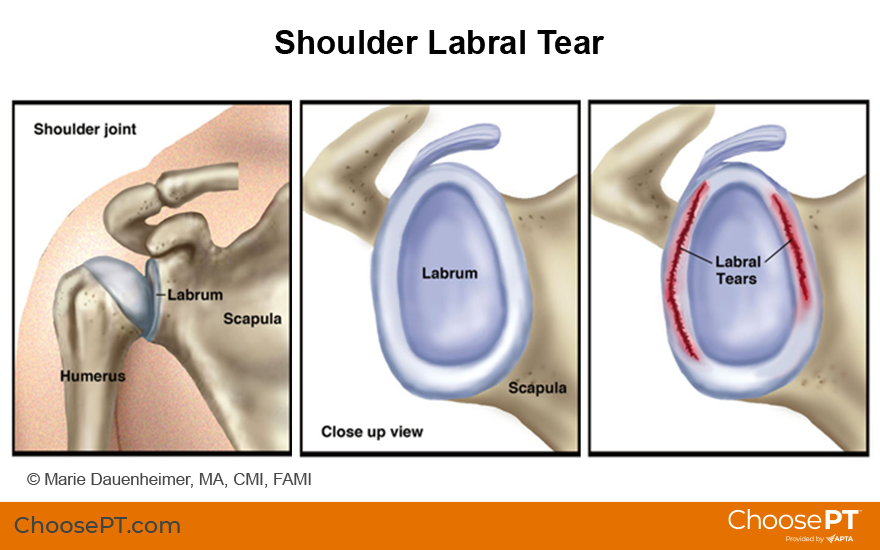
The labrum is a ring of cartilage that lines the socket of your shoulder joint. Its job is to deepen that socket and help keep the upper arm bone in place. Think of it like a bumper or gasket that adds support without limiting motion.
When it’s torn or irritated, things change fast. A labrum injury can create:
-
Ongoing pain with overhead motion
-
A sense of instability or slipping
-
Loss of strength or power
These symptoms don’t always show up clearly on tests. And labrum issues often don’t respond to typical shoulder treatments. That’s what made this patient’s case stand out. When her pain didn’t budge after two sessions, I had a suspicion we were dealing with something more complex.
Two Decades Ago, a Labrum Tear Meant Surgery
Today, it’s not as common. Certainly, some cases still require surgical repair, but the vast majority respond well to conservative care. With the right team and treatment plan, many athletes and active individuals can avoid surgery altogether.
Decades ago, Early labrum surgeries, especially in the shoulder and hip, often didn’t yield the results patients hoped for. In fact, the surgical trauma sometimes caused as much disruption as the tear itself.
What we’ve learned since is that load, compression, and joint mechanics play a huge role. If you can reduce compression and give the labrum space to move, healing is possible. That’s especially true with minor tears or irritation, where there’s no flap or fragment impinging the joint.
What Made This Case So Frustrating
My patient felt better when I restored mobility and took pressure off the shoulder. But every time she went back to work, she reinjured it. The repetitive motion and compression that comes with daily scrubbing essentially reset her progress.
This is where labrum rehab can become a cycle. Relief during treatment. Re-aggravation during routine activity.
This article isn’t designed to give a full treatment protocol. Instead, it’s here to help you understand that conservative care does work, but it takes time, adjustment, and the right approach.
Rehab and Recovery: Start Slow, Stay Smart
When I begin rehab for a labrum issue, the first goal is to calm things down. You have to put the fire out before you rebuild. Too many rehab programs jump into exercises too soon. If the joint capsule is inflamed, aggressive movement only makes things worse.
Your first job is to manage inflammation. That can be done with:
-
Standard anti-inflammatory medication
-
Avoiding heat, massage, and deep stretching, specifically if it’s in the inflamed, “Threat” state.
-
Focusing on joint unloading, not aggressive rehab. This isn’t the “let’s make is stronger” type of injury at first.
Once inflammation is under control and the labrum can glide more easily, I begin light movement work using distraction techniques.
Stage 1: The Alphabet Drill
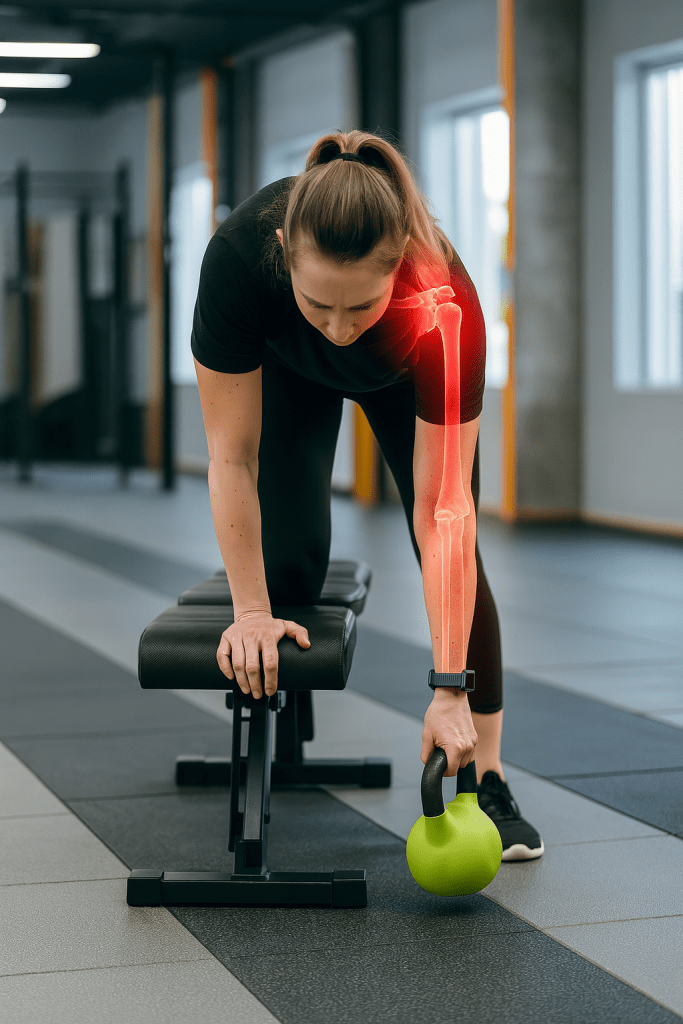
My go-to for early shoulder rehab is a distraction-based drill using a kettlebell or dumbbell. The key is finding the lightest weight that opens the shoulder joint without triggering the shoulder muscles to tighten and lock down. A shoulder response would actually cause contraction and activation at the labral area…yeah, we don’t want that.
This is more subtle than it sounds. For me personally, 10 to 12 pounds is usually ideal. More than that, and I feel the deltoid contract to stabilize the joint. That defeats the purpose. You want distraction, not compression.
Here’s how I teach it:
-
Hang your arm straight down in front of you, thumb facing forward.
-
Spell the alphabet in the air from A to Z.
-
Rest for 30 seconds.
-
Repeat with your thumb pointed down.
This drill promotes movement, joint space, and muscle engagement without re-irritation.
Why the alphabet instead of circles or simple swinging?
Ok, I don’t want to get too neurosciency (I think I made that up) on you but it work better because this is about training control and initiation not focusing on repetitive movement.
The part of your brain responsible for initiating and controlling movement is different from the area responsible for repetitive loops. The alphabet drill taps into the neural system that governs motor control and re-coordination — which is exactly what the shoulder needs.
Final Thought: It’s Not a Quick Fix, But It’s a Fix
Labrum injuries are tricky. They don’t follow a perfect timeline, and they almost never respond to traditional “rotator cuff” protocols. But with a modern, informed approach, you can get better.
We’ve seen it again and again. Rehab professionals, chiropractors, physical therapists, and athletic trainers with experience in shoulder mechanics have helped thousands recover fully — without surgery.
If this article sounds like your situation, don’t give up. Find someone who understands the mechanics of labrum injuries and who can guide you through the right rehab steps.
You don’t need to be stuck in pain. You just need the right approach.