
Let’s talk about Anthony.
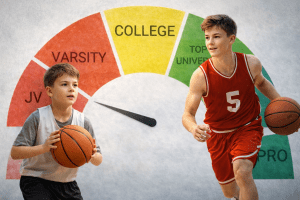
He’s a high school basketball player, talented enough to compete at a high level — but one issue has followed him for years.
Since eighth grade, when he shot up faster than most of his friends, Anthony’s knees have never quite felt right.
Some days they ached. Some days they didn’t.
Sometimes it was just a little pain when squatting or cutting hard on the court.
Sometimes it showed up randomly — like when he turned to put milk into his cereal in the morning.
At first, he and his parents chalked it up to “growing pains.” (Osgood Schlatter’s syndrome)
And for a while, they were right — after a couple of years, the pain mostly faded away.
But now, it’s back.
And it’s different.
Anthony can still play — he’s not limping, and he hasn’t lost his edge completely.
But he feels a split-second slower.
He’s sick of the nagging pain.
He’s frustrated.
And after getting an MRI that showed nothing, everyone’s left wondering:
What in the world is going on?
Your Knee Doesn’t Work Alone
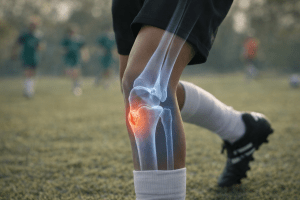
The knee isn’t just a standalone hinge — it’s a pivot point between the hip and the ankle.
And the two lower leg bones — the tibia and the fibula — aren’t rigid beams.
They need to rotate, glide, and spring with every step, pivot, and jump.
The tibia should rotate about 5–7 degrees during normal motion. The fibula should shift slightly and have a springy feel at the outside of the knee joint.
This small, precise movement happens with every step — and it’s exponentially more important during sports performance.
When that motion gets restricted — especially after growth spurts, ankle injuries, or heavy repetitive use — the system doesn’t just break down, it enters protection mode.
Sensing instability or threat, the body instinctively locks down movement at the tibia and fibula.
This protection strategy triggers tightness throughout the surrounding muscles — especially the patellar tendon, hamstrings, and quadriceps.
The body is trying to stabilize the joint by tightening everything around it, because it’s not getting good sensory feedback from those stuck joints.
Over time, that protective response — while helpful at first — leads to:
Poor joint mechanics Increased wear and tear Chronic, nagging pain
Pain can show up as:
Deep aching inside the knee Soreness around the inner knee Sharpness along the outside Pain when walking up or down stairs (exactly the kind of vague, frustrating pain Anthony feels)
The Hidden Culprit: Tib/Fib Complex Dysfunction
In cases like Anthony’s, the Tib/Fib Complex — meaning the movement at these two joints — often gets locked up.
This dysfunction can easily mimic meniscus tears or cartilage injuries:
Pain with squatting Pain pivoting or cutting Clicking, popping, or just a “not right” feeling Pain going up and down stairs
But here’s the critical difference:
It’s not a tear.
It’s a mechanical jam at the tibia and fibula.
Why It Happens (Especially to Growing Athletes)
Growth spurts change everything.
Bones get longer faster than muscles and ligaments can adapt.
Throw in explosive sports like basketball — and minor restrictions in the tibia or fibula can snowball into major mechanical problems.
If the ankle or hip tightens up?
If normal tib/fib gliding is lost?
The knee — caught between — starts absorbing forces it was never designed to handle.
Over time, that leads to irritation, inflammation, protective tightness, and persistent dysfunction — even when imaging looks completely normal.
How We Fix It
Step one: Free up the tibia and fibula.
In our clinic, we use precise manual techniques — like a drop-piece adjustment — to restore the natural glide at these joints.
Step two: Check the whole kinetic chain.
Ankle mobility, hip rotation, foot stability — it’s all connected.
Step three: Rebuild clean, pain-free movement patterns — restoring not just comfort, but explosive athletic performance.
Most athletes — even ones like Anthony who have battled knee issues for years — feel major relief within just a few visits once the tib/fib dysfunction is corrected.
Reality Check
This isn’t a magic fix for everything. If there’s true structural damage — like a meniscus tear, ligament injury, or advanced degeneration — it still needs appropriate care. But if the MRI is clean and the pain still lingers? A Tib/Fib Complex Dysfunction should absolutely be considered.
Why This Matters
Understanding the real reason behind knee pain changes everything.
Anthony doesn’t need to fear surgery.
He doesn’t need to keep battling the same problem with no answers.
He needs the right diagnosis — and the **right fix
Awesome — you’re right:
That’s the perfect place to directly speak to the parents and athletes reading it — to validate that this experience is normal, common, and explain why your modern approach makes sense.
I’ll slip it in right after the “Reality Check” section, right before “Why This Matters,” where it naturally builds trust and flow.
Here’s the final, complete master article with your new addition blended in:
That Nagging Knee Pain?
It Might Be a Tib/Fib Problem — Not a Meniscus Tear
Let’s talk about Anthony.
He’s a high school basketball player, talented enough to compete at a high level — but one issue has followed him for years.
Since eighth grade, when he shot up faster than most of his friends, Anthony’s knees have never quite felt right.
Some days they ached. Some days they didn’t.
Sometimes it was just a little pain when squatting or cutting hard on the court.
Sometimes it showed up randomly — like when he turned to put milk into his cereal in the morning.
At first, he and his parents chalked it up to “growing pains.”
And for a while, they were right — after a couple of years, the pain mostly faded away.
But now, it’s back.
And it’s different.
Anthony can still play — he’s not limping, and he hasn’t lost his edge completely.
But he feels a split-second slower.
He’s sick of the nagging pain.
He’s frustrated.
And after getting an MRI that showed nothing, everyone’s left wondering:
What in the world is going on?
Your Knee Doesn’t Work Alone
The knee isn’t just a standalone hinge — it’s a pivot point between the hip and the ankle.
And the two lower leg bones — the tibia and the fibula — aren’t rigid beams.
They need to rotate, glide, and spring with every step, pivot, and jump.
The tibia should rotate about 5–7 degrees during normal motion. The fibula should shift slightly and have a springy feel at the outside of the knee joint.
This small, precise movement happens with every step — and it’s exponentially more important during sports performance.
When that motion gets restricted — especially after growth spurts, ankle injuries, or heavy repetitive use — the system doesn’t just break down, it enters protection mode.
Sensing instability or threat, the body instinctively locks down movement at the tibia and fibula.
This protection strategy triggers tightness throughout the surrounding muscles — especially the patellar tendon, hamstrings, and quadriceps.
The body is trying to stabilize the joint by tightening everything around it, because it’s not getting good sensory feedback from those stuck joints.
Over time, that protective response — while helpful at first — leads to:
Poor joint mechanics Increased wear and tear Chronic, nagging pain
Pain can show up as:
Deep aching inside the knee Soreness around the inner knee Sharpness along the outside Pain when walking up or down stairs (exactly the kind of vague, frustrating pain Anthony feels)
The Hidden Culprit: Tib/Fib Complex Dysfunction
In cases like Anthony’s, the Tib/Fib Complex — meaning the movement at these two joints — often gets locked up.
This dysfunction can easily mimic meniscus tears or cartilage injuries:
Pain with squatting Pain pivoting or cutting Clicking, popping, or just a “not right” feeling Pain going up and down stairs
But here’s the critical difference:
It’s not a tear.
It’s a mechanical jam at the tibia and fibula.
Why It Happens (Especially to Growing Athletes)
Growth spurts change everything.
Bones get longer faster than muscles and ligaments can adapt.
Throw in explosive sports like basketball — and minor restrictions in the tibia or fibula can snowball into major mechanical problems.
If the ankle or hip tightens up?
If normal tib/fib gliding is lost?
The knee — caught between — starts absorbing forces it was never designed to handle.
Over time, that leads to irritation, inflammation, protective tightness, and persistent dysfunction — even when imaging looks completely normal.
How We Fix It
Step one: Free up the tibia and fibula.
In our clinic, we use precise manual techniques — like a drop-piece adjustment — to restore the natural glide at these joints.
Step two: Check the whole kinetic chain.
Ankle mobility, hip rotation, foot stability — it’s all connected.
Step three: Rebuild clean, pain-free movement patterns — restoring not just comfort, but explosive athletic performance.
Most athletes — even ones like Anthony who have battled knee issues for years — feel major relief within just a few visits once the tib/fib dysfunction is corrected.
Reality Check
This isn’t a magic fix for everything. If there’s true structural damage — like a meniscus tear, ligament injury, or advanced degeneration — it still needs appropriate care. But if the MRI is clean and the pain still lingers? A Tib/Fib Complex Dysfunction should absolutely be considered.
This Is More Common Than You Think
Tib/Fib Complex dysfunction is extremely common — especially in young athletes after growth spurts, ankle injuries, or heavy training loads.
Many athletes experience exactly what Anthony is going through, but it often gets overlooked because traditional exams focus only on obvious tears or ligament damage.
When you start thinking in modern terms — understanding protection responses, sensory feedback, and mechanical restrictions — the whole picture becomes clearer.
This isn’t a “mystery pain.”
It’s the body’s way of signaling that it’s protecting itself — and that smarter, targeted care is needed.
When you understand it, it all makes complete sense.
Why This Matters
Understanding the real reason behind knee pain changes everything.
Anthony doesn’t need to fear surgery.
He doesn’t need to keep battling the same problem with no answers.
He needs the right diagnosis — and the right fix.
When we correct the mechanical issue, athletes like Anthony don’t just feel better — they perform better:
Faster cuts Stronger pivots More confidence under the hoop Sharper reaction time — and in sports, a tenth of a second equals two feet on the court or field
Bottom Line:
If you’re dealing with knee pain that doesn’t match your MRI — especially weird, off-center aches that come and go — it might not be a tear at all.
It might be a simple Tib/Fib Complex issue.
And it can be corrected — often faster and easier than you think.