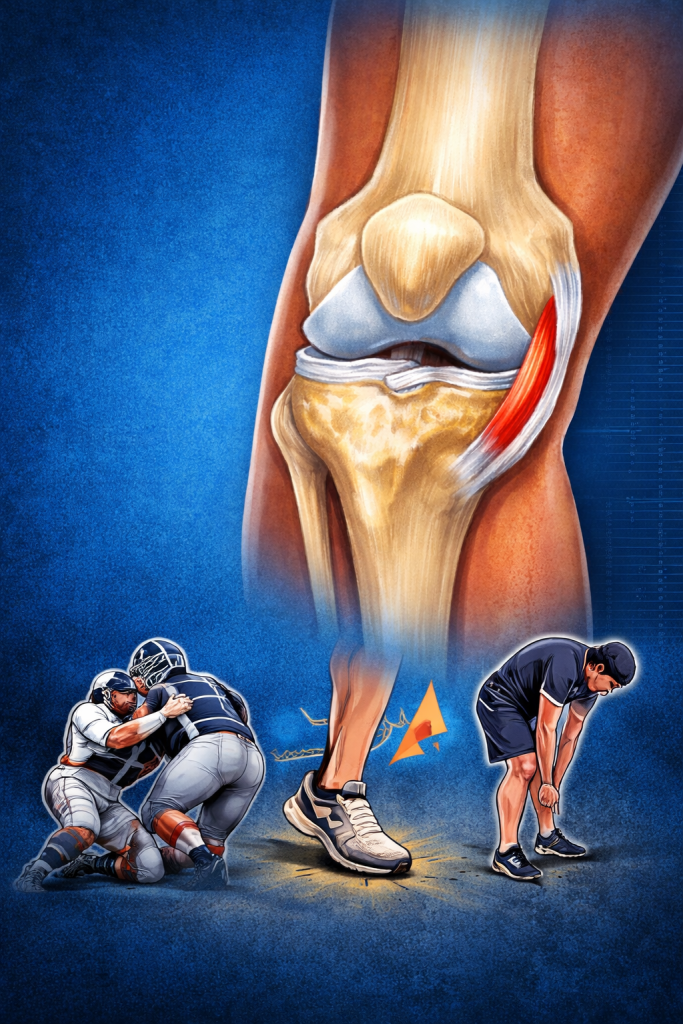
MCL Sprain (Grade 1): What It Is, Why It Hurts, and What To Do Next
If you’ve been told you have an MCL sprain, but need a bit more intel, you’re in the right place.
Most people hear “MCL” and immediately think:
-
“How long will this take?”
-
“Is my knee unstable? Do I need surgery?”
-
“Do I need an MRI?”
-
“Can I still train?”
-
“Is this going to keep happening?”
The good news?
A Grade 1 MCL sprain is usually a very recoverable injury with the right plan.
Let’s break down what’s happening, what to expect, and how to get back to normal life (and sport) without turning this into a long-term knee problem.
Quick Answer: What Is the MCL?
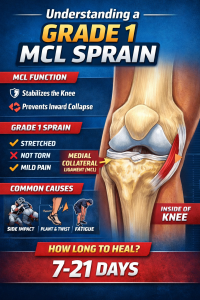
The MCL stands for the Medial Collateral Ligament.
It’s located on the medial side (inside) of your knee.
The MCL’s main job is to:
✅ Support the knee from collapsing inward
✅ Control side-to-side stability
✅ Prevent excessive shifting and gapping on the inside of the joint
In plain English:
It helps your knee feel “solid” when you cut, pivot, plant, or get hit from the side.
Sprain vs Strain (Yes, There’s a Difference)
A Strain = Muscle or Tendon
A strain is an injury to a muscle or the tendon connecting muscle to bone.
A Sprain = Ligament
A sprain is an injury to a ligament, which connects bone to bone.
So an MCL injury is a sprain, because the MCL is a ligament.
Grade 1 simply means:
✅ the ligament is stretched and irritated
❌ not torn all the way
❌ not unstable like a major ligament injury
But those semantics are more of an anatomy test question…many in the practitioner world just collectively say, “sprain/strain” and cover all the bases.
What Causes an MCL Sprain?
Most Grade 1 MCL sprains happen from one of these situations:
1) A Side Hit to the Knee
A force hits the outside of the knee and pushes it inward.
This is classic in:
-
football
-
soccer
-
basketball
-
wrestling
-
skiing
2) A Bad Plant + Twist
You plant your foot, the knee collapses inward slightly, and the ligament gets stressed.
3) Fatigue + Poor Control
The athlete is tired, the mechanics get sloppy, and the knee takes the load in the wrong direction.
This is why MCL sprains often happen late in games, late in practice, or after long tournament weekends.
What Does a Grade 1 MCL Sprain Feel Like?
Most people describe:
-
Pain on the inside of the knee
-
Tenderness when pressing along the ligament line
-
Pain with side-to-side movements
-
“It feels weird when I cut”
-
“It’s not giving out, but I don’t trust it”
And very commonly:
It hurts more when you move wrong than when you move normally.
That’s a classic “Grade 1 ligament irritation” pattern.
The Big Question: Is It Serious?
A Grade 1 MCL sprain is usually not a surgical injury.
But it is a warning sign.
A Grade 1 MCL sprain is often a stability problem before it’s a damage problem.
Meaning:
You may not have “torn something major”…
…but your knee is telling you:
“Hey — I’m not loving how forces are moving through this joint right now.”
Common Mistakes That Slow Down Recovery
This is where people get stuck.
Mistake #1: Resting Too Long
A little rest early helps.
But too much rest leads to:
-
stiffness
-
weakness
-
slower healing
-
loss of knee confidence
Mistake #2: Training Through Pain Because “It’s Not That Bad”
Grade 1 injuries trick people because they’re manageable.
But if you keep stressing the ligament the same way, it keeps getting re-irritated.
Mistake #3: Only Treating the Pain
Pain relief is great…
…but we also need to restore:
✅ strength
✅ control
✅ stability
✅ movement confidence
What You Should Do in the First 72 Hours
This isn’t medical advice for every human on earth — it’s a practical plan that works for most Grade 1 MCL sprains.
1) Calm It Down
The goal early is to reduce unnecessary irritation.
-
avoid deep twisting
-
avoid aggressive lateral cutting
-
reduce high-impact activity temporarily
2) Compression Helps
A light compression sleeve or wrap can help the knee feel supported.
Not because it “fixes the ligament”…
…but because it improves comfort and confidence.
3) Keep the Knee Moving
Gentle motion is usually better than total shutdown.
Motion is medicine when it’s the right motion.
How Long Does a Grade 1 MCL Sprain Take to Heal?
Most Grade 1 MCL sprains improve significantly in:
7–21 days
That doesn’t mean you’re ready for full sport instantly.
It means:
-
pain decreases
-
stability returns
-
confidence improves
-
the ligament calms down
But return to full cutting/pivoting depends on:
✅ your sport
✅ your position
✅ your strength base
✅ how irritated it got
✅ whether it’s been re-aggravated
as a practitioner and chiropractor, I want to speed the healing process and can do so with unique therapy options and ensuring the movement at the ankle/knee/and hip is optimal.
The Real Goal: Knee Confidence
This is the part nobody says out loud:
You don’t return to sport when the knee feels “fine.”
You return when you trust it again.
And trust comes from:
-
stable movement
-
strong hips and legs
-
proper mechanics under fatigue
-
progressive return to cutting
What We Focus On in Rehab (PPC Style)
Here’s what actually matters:
1) Control the Knee From the Hip
A lot of MCL stress comes from the knee collapsing inward because the hip isn’t controlling the chain.
We want:
strong glutes + stable pelvis + improved hip mobility + ankle mobility/stability.
2) Train the “No-Wobble” Knee
Not stiffness.
Not bracing forever.
But clean control.
3) Gradual Return to Side-to-Side
The MCL is stressed most during:
-
lateral shuffle
-
side lunges
-
cutting
-
deceleration
-
planting and turning
We reintroduce those step-by-step, not all at once, which could and will “increases the threat” and slow recovery.
When Should You Be More Concerned?
If you have any of the following, you should get evaluated:
-
the knee feels like it’s truly giving out
-
swelling increases dramatically
-
locking or catching
-
pain that worsens daily instead of improving
-
you can’t walk without limping after a few days
-
major bruising down the inside of the knee
Grade 1 MCL sprains usually improve steadily.
If it’s not trending better, we need to reassess the diagnosis and the plan. MRI, Xray and looking for other issues mimicking the diagnosis.
Return to Sport Checklist (Simple and Honest)
Before full return, you should be able to:
✅ walk normally
✅ squat without sharp medial pain
✅ step down off a box without knee collapse
✅ jog without pain
✅ change direction without hesitation
✅ do sport-specific movement at 70–90% effort without flare-ups
This isn’t about being perfect.
It’s about being safe and confident.
The Bottom Line
A Grade 1 MCL sprain is usually a short-term injury…
…but it becomes a long-term problem when people:
-
ignore it
-
rest too long
-
return too fast
-
never rebuild knee control
If you want the fastest path back to normal:
Calm it down. Build control. Return with a plan.