A Precision Performance Concepts Lecture
Dr. Chad Peters DC
Before We Begin: See Me Through the Right Lens
If you look at me today and only see a chiropractor, everything in this lecture will be filtered through that stereotype. I need you to see the whole picture.
I actually work three different jobs.
One: Chiropractor.
I run a sports based clinic and work with athletes every day.

Two: Author and Creator.
I write books, articles, and performance education. This website is full of those projects.


Three: Human Performance Expert.
I study the newest ideas being used at the professional and Olympic levels, then translate them into tools high school athletes and coaches can use immediately.
The next decade of my career is shifting more toward this third lane.
I want to help entire teams and entire schools level up, not just one patient at a time.
Today, think of me as a hybrid of all three.
Less chiropractor. More human performance.
Plenty of kinesiology. I use it in all three jobs. Daily.
What Kinesiology Really Is
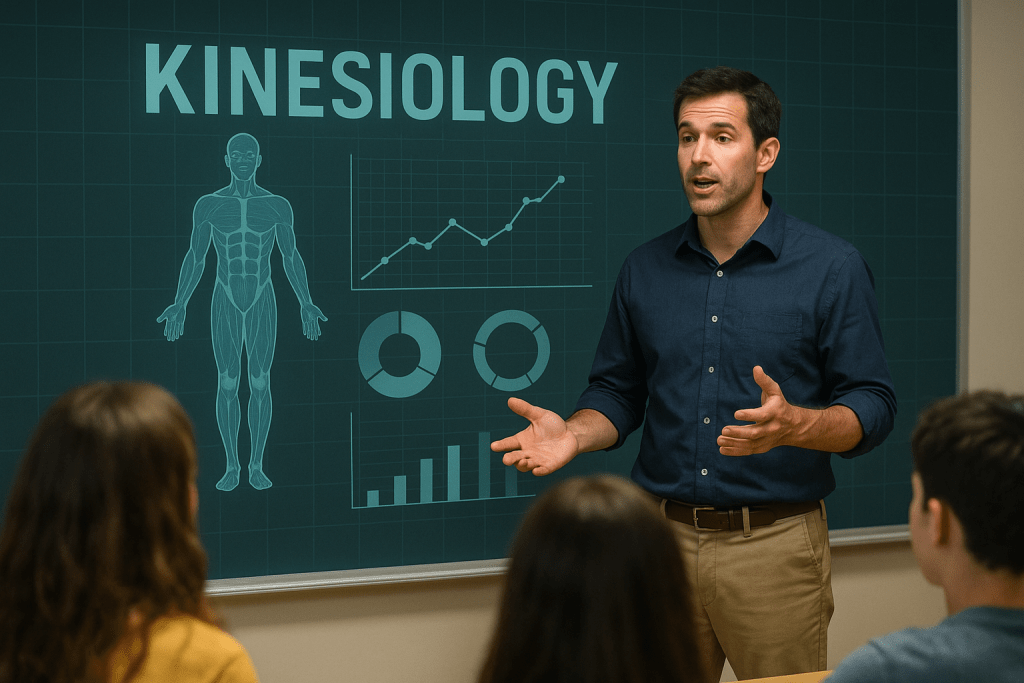
Kinesiology is simply the study of how the human body works and how it moves.
If you are unsure what you want to major in
If you want a career in sports, health care, training, or coaching
Or if you simply want to understand your one and only human body better
This is an incredible place to start.
I often tell college students this example:
If you were given one car at age 16 and told it had to last your entire life, almost everyone would become an auto mechanic.
That car would be too important not to understand.
The human body is that car.
You only get one.
The more you know about it, the more advantages you have in every single area of life.
How You Learn the Human Body in School
Kinesiology usually gets built in layers.
You learn the anatomy
Bones
Muscles
Joints
Nerves
Organs
Then you learn the physiology, which is how all of those systems interact.
Heart rate, energy systems, reflexes, breathing, digestion, hormones, and all the automatic pieces that turn anatomy into performance.
That is why college has a course called Anatomy and Physiology.
You learn the parts, then you learn how the parts talk to each other.
How the Body Actually Works in Real Life
Here is the cool twist. The structure above is a great way to learn about the body, but it is not the way the body actually works.
Everything is connected, everything affects everything else, and almost nothing happens in isolation.
Your brain does not think in isolated muscles. It thinks in overall goals.
You do not think
“I will contract my pec, then activate the rotator cuff, then switch to the decelerators.”
You think
“Throw the ball.”
And instantly, thousands of coordinated movements fire in perfect timing.
The brain runs full systems, not individual pieces.
A great way to think about this is baking a cake. If there are eight ingredients in the recipe and a timing sequence that optimizes the results, simply dumping flour into a bowl and expecting a cake is foolish. (I call this the Insta/TikTok version of learning.)
That is why kinesiology becomes so powerful when you finally connect the dots.
You see the body the way the body sees itself.
The Flow State: The Top of the Human Performance Pyramid
If you have ever hit perfect focus during a game, you know this feeling.
Your heart rate rises
The crowd disappears
Your senses sharpen
The game almost slows down
Your neurons fire faster
Your decision making becomes effortless
Your reaction time tightens
Your awareness expands beyond normal speed
This is the flow state, and it sits at the intersection of anatomy, physiology, psychology, brain power, and skill.
This is kinesiology at full volume.
When you study the human body, this is the level you eventually learn to shape and influence.
How This Connects to Sports
– both for Sports Med. & Sports Performance
In my sports doctor role-
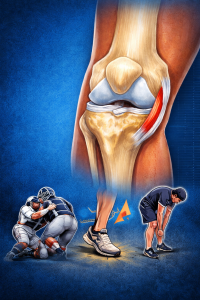
When I look at an athlete with pain, stiffness, or a performance drop, I do not just look at the injured spot.
“It hurts here” is a poor diagnostic tool.
Shifting to my performance role, the same formula applies.
Whether fixing an injury OR improving the human machine, I use a concept called systematic troubleshooting.
I live and work where it all comes together and overlaps.
The anatomy
The physiology
The movement patterns
The nervous system response
The performance demands
This is kinesiology in action.
A great way to learn this is to see it in action.
For this next part of the lecture, we will take a volunteer from class and actually work through a mini case. You will see how performance mindset, anatomy knowledge, and physiology understanding combine into a clear picture of what is happening inside the body.
My goal is not to turn you into clinicians. But it is the anti TikTok.
My goal is for you to understand how many career paths open when you know this information.
- work up
A Quick Word About Performance Myths
This field evolves slowly. We all have biases that shape our views within our professions.
Many ideas take an entire generation before they finally make it down to the high school level.
That said, all fields are evolving faster than ever before.
One example:
We do not stretch before sports anymore.
That is outdated and does not match performance science.
Changes like this can take years to spread if people are not taught the “why” behind them.
This is why I want kinesiology students to go deeper.
You become the generation that speeds up the transition and moves high school athletics forward.
Today’s Plan
One: Understand kinesiology as a whole.
Your body, how it is built, and how it actually works.
Two: Walk through a real case in class.
You will see how anatomy, physiology, and movement analysis blend into one picture.
Three: See how this applies to performance.
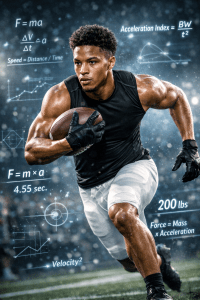
Flow state, reaction time, speed, coordination, output.
Four: Finish with career possibilities.
Athletic training
Sports chiropractic
Strength and conditioning
Physical therapy
Performance coaching
Tactical training
Human performance science
Sports media, writing, and content
And more
I will wrap this lecture up, then I have a real clinic to run, but you will leave today with a clearer picture of what kinesiology actually unlocks.
Final Thoughts
Kinesiology is a popular subject and the careers connected to it are growing daily. It is one of the most valuable subjects you can study.
Not because everyone needs to be a doctor, coach, or personal trainer
But because everyone has a body
Everyone wants to perform well
And everyone benefits from knowing how this machine works.
If you choose kinesiology, you are choosing to understand the most important system you will ever own.
If you are curious, confused, undecided, athletic, artistic, analytical, or just want to build a career around helping people move and perform, this is a fantastic direction to explore.
Welcome to the study of human performance.