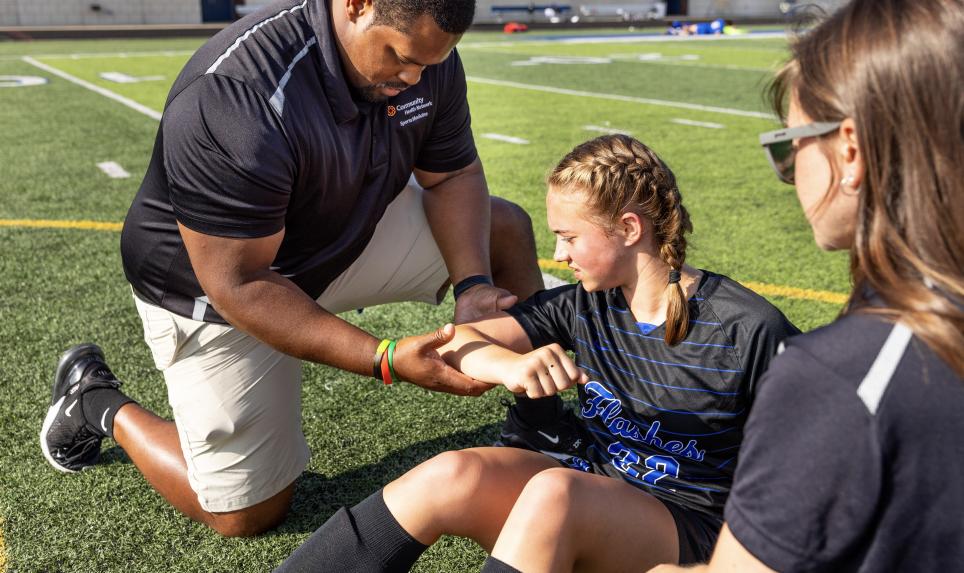
They’re Not Just Tape and Ice. They’re the first line.
We all know how this goes:
An athlete gets hurt.
Parents worry.
Coaches panic.
And someone — almost always — blames the athletic trainer.
Let’s shift that narrative right now.
🧠 The Role You Think They Play — vs. The One They Actually Do
Athletic trainers aren’t just there to tape ankles and hand out ice packs.
They’re trained professionals with real education, high-pressure responsibilities, and an intense love for their athletes.
They:
-
Make critical decisions in real time
-
Manage rehab protocols from day one to full recovery
-
Serve as the bridge between athletes, doctors, coaches, and families
-
Are often the first and last person an injured athlete sees
They are not trying to keep your kid from playing.
They are trying to keep your kid from permanently breaking down.
🙋♂️ Seen It From Both Sides
As a former collegiate athlete and now a sports-based chiropractor, I’ve lived this from both angles.
When I played, I had a phenomenal relationship with my own AT’s. No doubt – the reason I do what I do today is directly because of that link.
I still love that bond today as the team chiro for TAMUCC Islanders – where I work in conjunction with my AT’s each week. I also have a great working relationship with my local HS AT’s and talk directly with one or more of them daily.
Every time I watch them in action, I’m reminded just how vital they are — balancing athlete care, pressure, and safety in the real world, not on paper.
We may have different perspectives and terms that look competing at times but mostly – we just want the same things, for our athlete’s to be healthy and a chance to do what they love.

🎯 A Unified Goal: What’s Best for the Athlete
When everyone does their job right, it looks like this:
-
The athlete feels heard, supported, and guided
-
The parent feels informed, not blindsided
-
The coach has a clear view of timelines and expectations
-
The AT can operate without fear of blame or backlash
-
The doctor/clinic becomes an extension of the recovery team
This isn’t a chain of command.
It’s a circle of trust — and when it’s strong, athletes win.
🛠️ What You Can Do (as a Parent, Coach, or Clinician)
-
Start with respect
Don’t second-guess an AT in front of an athlete. Ever. That trust is sacred. -
Communicate early
If you’re a doctor or specialist, reach out. Let them know what you’re thinking. Offer to collaborate. -
Support them publicly
They catch a lot of heat. Be the one who says, “They’re doing a great job.” -
Assume they know more than you think
Most ATs have already picked up the subtle cues, movement imbalances, and readiness markers — they see these kids every day. -
Say thank you
Often. Sincerely. These professionals never get enough of it. BECAUSE – this job is brutal. In college it was the cool job, on the field, with the team a real difference. Dreams of performance training and on the field game prep just like the guys in the NBA and NFL. Then they get to the high school setting and it’s often 400+ athletes all with unique circumstances and needs, bureaucracy and protocols in place to protect THE SCHOOLS, a non stop of triage and tweaks all while training a high school support staff and OH yeah – 6 teams need coverage and water stations set up at 3:15. It is a 6 am to 11 pm job 6 night a week. These guys and girls seriously LOVE their job and YOUR KIDS!
💬 One Final Thing
If your athlete is hurt and the AT is being cautious, that’s not an inconvenience.
That’s what right looks like.
And if your clinic or specialist ever dismisses an AT’s role or input — you may want to reconsider who you’re working with.
Because at the end of the day, athletic trainers are doing everything they can to keep your kid in the game — not just today, but 10 years from now too.
🙌 Respect the Role. Build the Relationship.
Athletic trainers aren’t the problem.
They’re the unsung solution in a chaotic, high-stakes environment.
Let’s treat them like the trusted teammates they are.