Beyond the Stripes: Modern Kinesiology Taping and the Body Mapping Revolution
How Colored Tape Became One of the Most Sophisticated Tools in Sports Medicine
Introduction
Remember those brightly colored strips of tape that took over the Olympic stage?
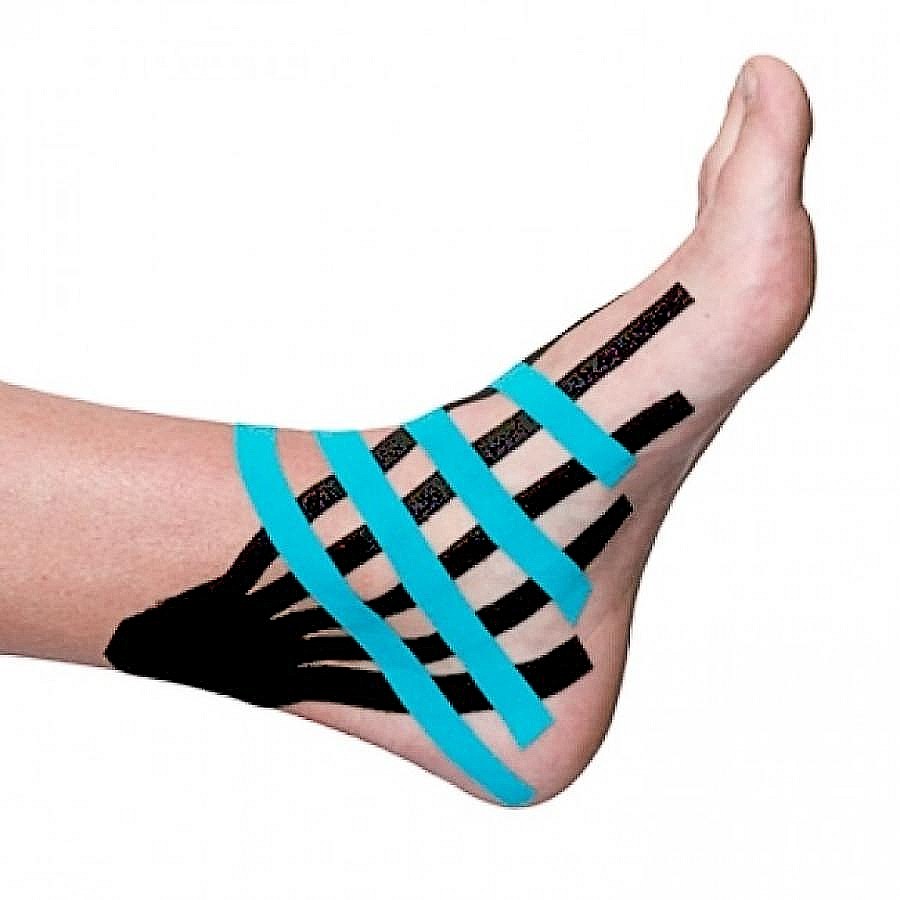
Whether it’s RockTape, K-Tape, or classic Kinesio Tape, these vibrant stripes have become a modern symbol of athletic performance and recovery.
But there’s far more going on under the surface.
My own journey with kinesiology taping started nearly two decades ago. My wife and I were among the early adopters—certified long before it became mainstream. Back then, we were working with a tool we didn’t fully understand. Today, thanks to modern neuroscience and movement science, we do.
What changed? A deeper understanding of the body’s “body mapping” system.
🧬 The Evolution of Kinesiology Taping: From Support to Sensory Science
Originally, kinesiology tape was promoted as a tool for:
-
Muscle support
-
Pain reduction
-
Joint alignment
And while those benefits still hold true, modern application goes much deeper. The true power lies in its interaction with the sensory nervous system—specifically, how it affects the brain’s internal “map” of the body.
🧠 Body Mapping: The Skin’s Real Role
Your skin—and the fascia just beneath—isn’t just a protective layer.
It’s a massive communication hub constantly relaying real-time data to the brain about your body’s position, tension, pressure, and movement.
Think of it like a high-speed internet connection.
Now imagine kinesiology tape as a signal booster tapping into that network.
🔍 How Kinesiology Tape Actually Works
1. Tactile Stimulation & Mechanoreceptor Engagement
The tape’s gentle lift activates mechanoreceptors—nerve endings that respond to stretch, touch, and pressure.
This stimulates the brain’s sensory system far beyond just the skin.
2. Enhanced Proprioception
The brain receives a steady stream of feedback, improving awareness of limb position and movement (proprioception). This enhances motor control and coordination.
3. Pain Modulation
The stimulation can “turn down the volume” on pain signals, helping recalibrate how the nervous system perceives threat or injury.
4. Lymphatic Drainage & Edema Reduction
The lifting effect helps create space, promoting fluid movement.
Imagine a hurricane-blocked highway—tape acts like a bulldozer, clearing lanes for drainage and healing.
5. Decompression & the Rebound Effect
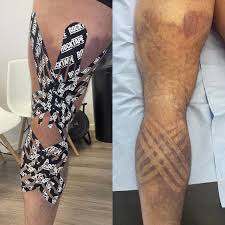
Stretching the tape or skin creates a rebound (scrunching) effect. This can relieve pressure on superficial nerves, particularly in areas aggravated by compression.
6. Neurological Reset
This continuous sensory input may even help the brain “reset” faulty movement patterns or muscle inhibition in the taped area.
🗺️ The Google Maps Analogy
Think about old Google Maps on a 3G network:
You drop a pin, and at first, the image is blurry—but as the network collects more data, it sharpens.
Kinesiology tape works the same way—sharpening the brain’s image of a body part that’s been injured, overused, or “offline.”
⚙️ Modern Applications: What We Now Know
✔️ Directional Application
While early theories suggested tape direction could “turn muscles on or off,” the real effect is more subtle: it modulates sensory input, helping the nervous system recalibrate.
✔️ Edema Management
One of the most powerful and overlooked uses. Even discolored swelling can be improved with well-applied tape—restoring drainage and mobility in ways compression alone can’t.
✔️ Decompression for Nerve Pain
Using the tape to gently recoil across sensitive areas creates space, which can provide faster relief than aggressive manual work.
✔️ Wearable Therapy
This might be its biggest strength. Tape keeps working for 3–5 days, extending therapy well beyond the treatment table.
⚠️ A Word of Caution
With so many tools available, it’s tempting to stack techniques—cupping, needling, compression, stimulation, scraping, etc. But be careful:
Too many mixed inputs = a “dyslexic” response in the nervous system.
Compression and decompression shouldn’t be used indiscriminately. Taping is most powerful when used intentionally, as part of a focused treatment strategy.
🧭 Beyond the Stripes: A Shift in Perspective
The real value of kinesiology taping isn’t the color, the brand, or even the placement.
It’s about tapping into the body’s sensory system and restoring proper movement through better communication with the brain.
💡 Conclusion
Kinesiology taping has come a long way.
Once seen as just a flashy support tool, it’s now recognized as a neurological, proprioceptive, and lymphatic modulator—a wearable, adaptable treatment that bridges hands-on therapy with ongoing recovery.
Whether you’re using RockTape, K-Tape, or Kinesio Tape, the principles are the same:
Re-map the brain. Restore movement. Reduce pain. Keep healing active.
🗣️ Call to Action
Are you using kinesiology tape in your practice or training?
We’d love to hear how it’s working for you—and how you’re integrating the principles of body mapping into recovery and performance.
Tag us. Share your methods. Keep pushing the field forward.