A PPC Lab – Injury Story
by Dr. Chad Peters
The Athlete
Casen is a large seventh grader.
His older brother is a senior in high school.
Six-foot-six.
Built.
A multi-sport athlete.
Casen is clearly on the same path.
He plays basketball.
Soccer.
Runs track.
And he has knee pain.
What the Pain Looks Like
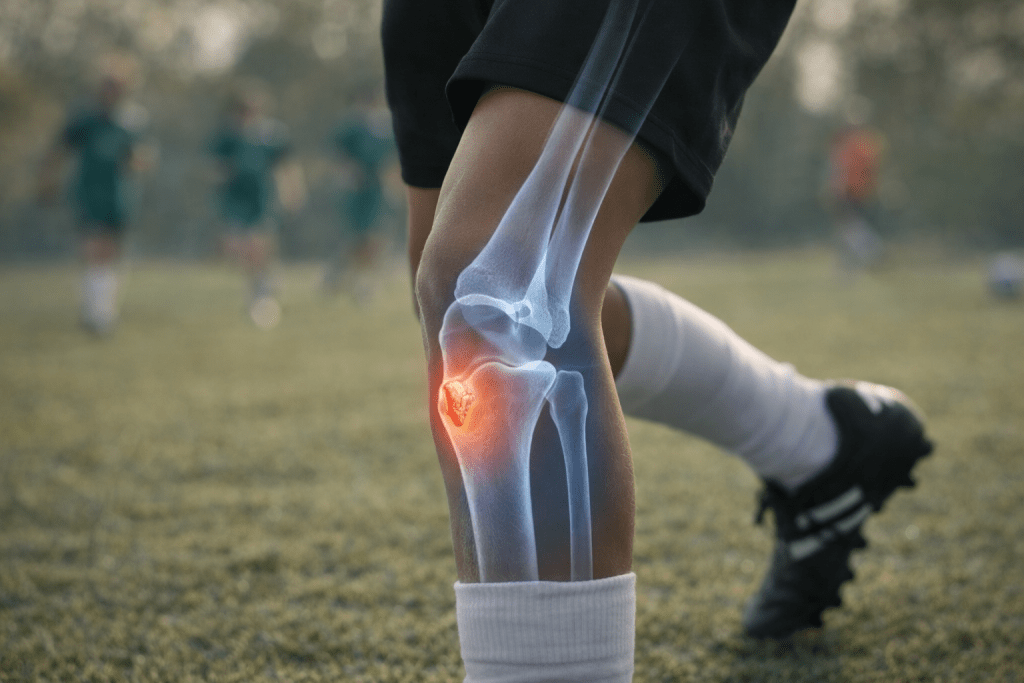
The pain sits just below the kneecap.
Right where it shouldn’t be ignored.
Some days it’s nothing.
Other days it hurts to stand up from his desk at school and walk.
There’s no clear pattern.
What his parents notice is this:
-
A few weeks of soreness and pain
-
Then… it just goes away
-
A month or two later, it comes back
This cycle has been repeating for about 14 weeks.
Why Parents Start to Worry
At some point, someone says the name.
Osgood-Schlatter’s.
Suddenly the stories come out:
-
“That kept my kid out of sports.”
-
“He couldn’t play for years.”
-
“We were told to just wait it out.”
Now the fear sets in.
Why the Symptoms Come in Waves
This part actually makes sense once you zoom out.
Middle school athletes live in chaos:
-
Rapid growth
-
Changing leverage
-
Inconsistent coordination
-
Big increases in activity
The knee doesn’t fail randomly.
It reacts to growth plus load.
That’s why the pain:
-
Spikes
-
Calms down
-
Disappears
-
Comes back
It’s not healing and reinjuring.
It’s adapting — imperfectly.
Why the Name Isn’t the Most Important Part
Osgood-Schlatter’s is a helpful label.
It tells us:
-
Where the pain is
-
Why it shows up during growth
What it doesn’t tell us is:
-
How intense it is
-
How long it will last
-
How to manage it intelligently
The danger isn’t the diagnosis.
The danger is assuming it means:
“Shut it down and wait years.”
What Changed Everything
With the right approach, Casen’s pain settled down within about 10 days.
He didn’t stop being active.
He didn’t disappear from sports.
He didn’t get scared of his knee.
He learned how to manage it.
The Long Game Matters
A few months later, the pain started creeping back.
This time:
-
Casen recognized it early
-
His parents didn’t panic
-
They came back in before it escalated
They already understood:
-
What it was
-
Why it happens
-
How to calm it down
That changed everything.
Why This Is a Management Injury
This is the key concept parents miss.
Osgood-Schlatter’s is rarely a one-and-done injury.
It’s a management problem, not a fragility problem.
Handled early and intelligently:
-
Kids stay active
-
Confidence stays intact
-
Sports continue
Ignored or feared:
-
Pain cycles last longer
-
Anxiety increases
-
Performance drops
The Outcome
Casen managed this well through middle school.
Through growth spurts.
Through multiple sports.
Through changing seasons.
By high school, just like his brother, he became:
-
Strong
-
Resilient
-
A coach and fan favorite
Not because the problem never showed up again.
Because he understood it.
The PPC Lab Takeaway
-
Anterior knee pain in growing athletes often comes in waves
-
Pain that disappears and returns is a clue, not a mystery
-
Early management beats prolonged shutdown
-
Fear creates bigger problems than the condition itself
This isn’t about avoiding sports.
It’s about navigating growth intelligently.
Want a Deeper Dive?
If you want a deeper dive into this type of injury, you can read more here:
https://sportsdocdc.com/osgood-schlatters-syndrome-2/