Why Foot and Calf Control Are the Missing Link
By Dr. Chad Peters | Precision Performance Concepts – Common Injuries series
A Common Injury With a Commonly Wrong Approach
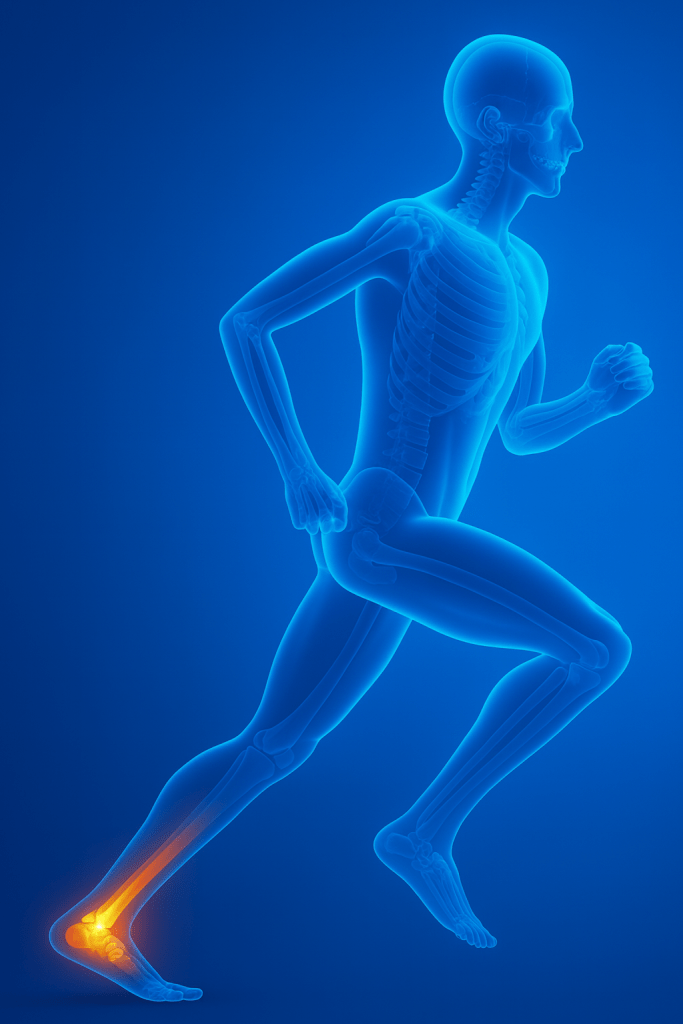
Achilles tendon pain is one of the most common issues in sports performance and rehab. Runners, basketball players, soccer athletes, and weekend warriors all struggle with it.
Most people fall into the same cycle. They try a walking boot, ice, rest, calf stretches, heel lifts, or the latest miracle program from YouTube. The pain improves for a while, only to come back again.
This cycle calms the flare but does not rebuild the system. The truth is simple. Your Achilles is not broken. It is undertrained, misunderstood, and often missing one key piece in recovery: the foot and ankle.
Why Your Achilles Keeps Breaking Down
The Achilles tendon is not just a rope that connects your calf to your heel. It is part of a complex system that includes the foot and ankle.
-
The plantar fascia and the Achilles tendon are directly connected.
-
The toes and small foot muscles control how much stress the tendon absorbs.
-
The calf muscles provide power through the tendon, but not equally.
Most rehab programs only focus on the gastroc, the big calf muscle. Here is the critical piece. Only one third of the Achilles tendon comes from the gastroc. The other two thirds come from the soleus, the deeper calf muscle that activates when the knee is bent.
If you never retrain the soleus, you are leaving the majority of the tendon unaddressed.
The Missing Link: Foot and Ankle Control
If you have read my article Foot Fixed, you know that the foot and ankle act like a suspension bridge for the entire system.
When the foot stops moving well, the Achilles is forced to take the overload.
-
Toes stop bending and flexing.
-
The ankle locks up.
-
The arch collapses or becomes rigid.
-
The tendon becomes the fall guy for all of it.
This is why so many Achilles injuries linger. You cannot rebuild the tendon in isolation. You must reconnect the foot, ankle, and calf as one system.
Treatment Framework (Educational, Not Prescriptive)
This section is for educational purposes only. Every case is unique and should be evaluated by a qualified professional. That being said, here is the basic framework I use in clinic.
Step 1: Calm the Inflammation
In the early stage, the tendon is swollen, irritated, and angry. The first job is to settle it down before you can build it back up.
Step 2: Restore Motion
-
Ankle ABCs: trace the alphabet in the air with your big toe. Slow, controlled, and full range.
-
The Big 3 Toes: play with the toes, interlace fingers between them, and practice spreading them apart. These reconnect the brain to the foot.
Step 3: Rebuild Strength
-
Straight Knee Heel Raises: focus on the gastroc with 10 slow, controlled reps.
-
Bent Knee Heel Raises: target the soleus with 10 slow, controlled reps. This is the critical piece that most people miss.
Step 4: Advanced Tools When Available
These techniques accelerate recovery but are not required in every case.
What Most Programs Miss
-
The Soleus Muscle: most rehab only works the gastroc and misses two thirds of the tendon.
-
The Foot and Toes: proper motion and control at the foot are what unload the tendon.
-
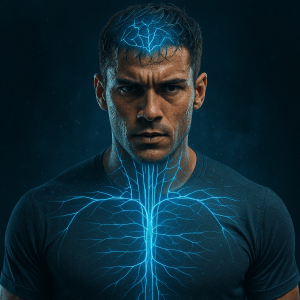
The Nervous System: your brain must relearn to trust the tendon. That means controlled reps, not just stretches.
Related Reads
The Filter
If you are looking for a silver bullet shoe or a quick fix stretch, this article is not for you.
If you are willing to learn how your body works, reset your foot and ankle, and train the soleus that most programs ignore, then you can often return stronger than before.
Final Word
The Achilles tendon is not weak. It is overloaded.
When you treat the foot, ankle, and calf as one connected system, you give the tendon the ability to do what it was designed for. The Achilles is built to absorb force, store energy, and release power with every step.
This is the modern approach. It is how you get out of the injury loop and back into performance.
Related