A PPC Lab Story – performance ideas based on actual cases
Dr. Chad Peters
When Strength Was Never the Problem
By the time Tucker walked into high school as a freshman, the nickname had already stuck.
“Big Country”
It followed him everywhere. In the hallway. In the locker room. On the sideline. Coaches used it casually, the way you do when something feels obvious and settled.
Big Country was built different.
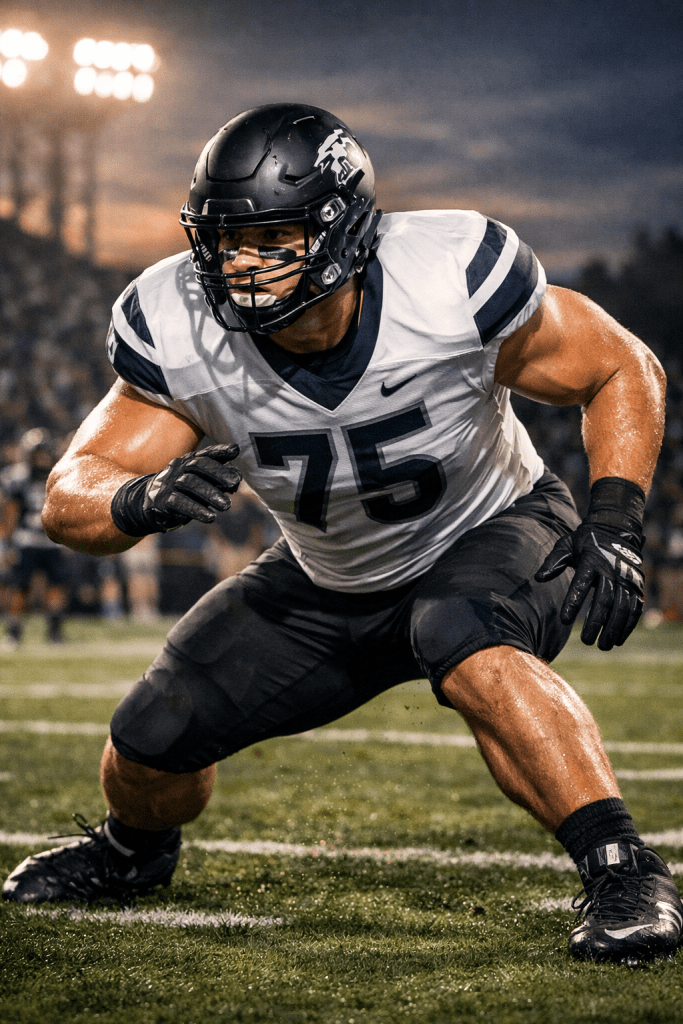
He was thick through the hips and legs, broad through the shoulders, and carried himself like someone who already belonged. He was not a project. He was not a long shot. He looked like a future varsity lineman before he ever put on a varsity jersey.
Halfway through the season, he was pulled up to JV. Not because the team needed bodies, but because he could handle it.
By the end of the year, the conversations started.
Next year.
Varsity.
Contributor.
Tucker heard all of it. He believed it. And he did what motivated athletes do when they are given a clear signal that they are on the right path.
He went to work.
The Summer That Made Sense on Paper
That summer, Tucker lived in the weight room.
Early mornings. Late afternoons. Extra sets when no one was watching. The program was familiar and respected. Squat. Bench. Deadlift. Add weight. Track numbers. Chase progress.
And it worked.
His bench climbed past 300. His squat moved into the 400s. His body changed. He filled out. He looked more and more like the picture everyone had in their head.
People noticed. Coaches nodded. Teammates asked what he was lifting.
On paper, Tucker was becoming exactly what a high school football player was supposed to become.
The Outcome Nobody Expected
Varsity season came.
Tucker did not start.
He rotated early, then less. He played special teams. He stayed ready. He told himself it would come.
It did not.
Sophomore year passed. Junior year followed the same pattern. By then, Tucker was not confused anymore. He was frustrated. Just another guy that looked the part standing on the sideline.
He was strong. Everyone knew that. But strength was not turning into playing time.
Heading into his senior year, the math became uncomfortable and very clear.
If something did not change, nothing would.
The Question That Changed Everything
The thought crossed his mind more than once.
Maybe this just was not going to happen.
He had done everything right. He lifted. He committed. He sacrificed summers. He chased numbers that were supposed to mean something.
He even considered quitting.
Instead, he was asked a question that landed hard because it was honest.
Are you training for football, or are you training for powerlifting?
Tucker did not argue. He did not defend himself. He sat with it.
There was overlap between the two worlds, sure. But the overlap was smaller than he had been led to believe.
And shrinking.
The Trap He Never Saw Coming
Tucker was not doing anything wrong.
He was doing exactly what football culture had rewarded for years. Bigger numbers. More plates. More mass. More grind.
The problem was not effort. The problem was the target.
As his strength climbed, a few quiet things changed. His stance widened. His hips stiffened. His first step slowed. His ability to redirect faded. None of it showed up on a max chart.
It showed up on film.
He had built force in controlled environments, not chaotic ones. He could produce power straight ahead, but struggled when the game demanded quick changes, repeated efforts, and precision under fatigue.
Strength had not betrayed him. It just didn’t fit his sport.
The Crossroads
This is the moment where Big Country hit a crossroads.
This is where this story becomes a choose your own adventure.
Path One: Hope.
Tucker keeps doing what he has been doing.
More weight. More plates. Bigger numbers in the weight room.
He hopes that strength alone eventually turns into better football.
It does not.
Nothing changes except the calendar.
Path Two: A Plan.
Tucker keeps training, but the focus changes.
Strength stays, but it is no longer the objective.
Movement quality improves.
Power becomes transferable.
Speed begins to show up on the field. Weight, Mass, Strength are not the primary metrics of sports success.
A Different Way Forward
That summer, Tucker made a decision that felt risky at the time.
He trained differently.
He started working with a guy named Jeff Paluseo at Sports Fitness Solutions. Most cities have a facility or trainer built like this. A new version of performance training built for specific sports, positions and even body types. The workouts here looked nothing like the weight room from a decade ago and had little resemblance to an athletic club.
The first few weeks were uncomfortable. Both physically uncomfortable but more so, Mentally uncomfortable.
There were fewer barbells. Less chasing numbers. Sessions were built around time, speed, and intent instead of load. Jeff cared more about how fast things were moving than the weight used.
Single leg work. Split stances. Deceleration drills. Jumps. Movements that demanded control, change of position, as much as power.
Some days felt more like track than football. None of it was anything Big Country was used to.
That bothered him.
When the Scale Moved the Wrong Way
Then the scale started to move.
Down.
Tucker noticed it immediately. Losing weight felt like losing protection. It went against everything he believed about what a lineman was supposed to look like.
He was nervous. He questioned it. He wondered if he was undoing years of work.
But what were the alternatives? His way was not working.
So he stayed with it. Jeff explained that the newest sports performance science shows that there is a level of strength you need to get to, and gave examples of 1.75x body weight (bw) on squat and 2.0x bw for hex bar deadlift and after than level additional strength doesn’t show much of a benefit and often shows a detriment to performance. Between sets, his trainers would shout all sort of sciency sounding ideas, “Acceleration, deceleration, change of position, this is the new performance metrics! We train for this because the sport demand this!”

When the Body Starts to Answer Back
Over the next few weeks, something unexpected happened.
He was not as sore anymore. He recovered faster. His body felt lighter, but not weaker.
Bouncier.
His work outs weren’t brutal. More often, they felt like he wasn’t doing enough. He was rarely tired and because he had spent years judging progress by “degrees of soreness” was constantly questioning his workouts. Sometime his trainer Jeff would have him sprint 6×15 seconds with 3 minutes rest in between sets and then do basically warmup drills. And that was it!!
It just didn’t seem… Enough.
But, it was hard to argue with the results. One afternoon after a session, messing around, Tucker jumped and dunked a tennis ball.
He stopped and laughed.
That had never happened before.
He liked his new body. Not because it was smaller, but because it moved differently.
When the Field Told the Truth
Summer camp opened, and opinions were split.
Some coaches liked the new look. Others did not. A few joked that he was wasting away. That he must have slacked off.
Tucker heard all of it. He was a bit unsure himself.
Then practice started.
The drills did not lie.
He was faster off the ball. He redirected pressure instead of absorbing it. He stayed low without forcing it. He moved with intent instead of effort.
He was still powerful. More so, and it wasn’t push harder, try tougher, it was…easy.
He was dangerous now.
What surprised people most was not what he had gained, but what he had let go of.
He no longer looked like the old idea of a “lineman.”
He looked like the reality of one at elite levels. Fast. Explosive. Mobile. Able to repeat effort without fading.
The Player Everyone Had Been Waiting For
Tucker earned his spot.
Then he earned more.
All district. All area. A scholarship that once felt out of reach.
The nickname stayed.
Only This time, it meant something different.