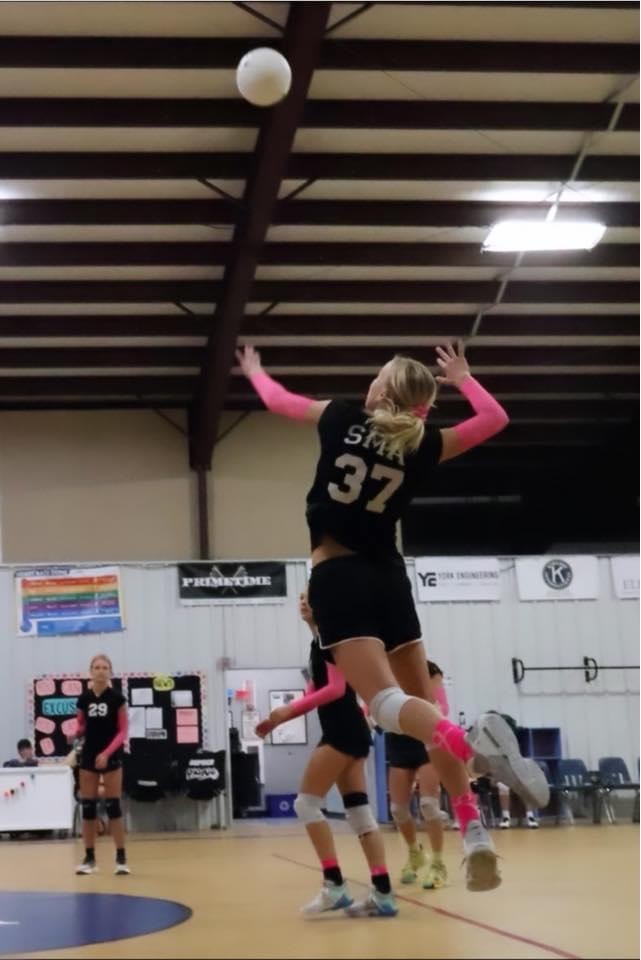
🏐 Volleyball Made Easy for Parents
Your sideline cheat sheet to understanding the game your kid fell in love with.
Volleyball might be the most misunderstood awesome sport in youth athletics.
And no, it’s not “bump-set-spike” anymore.
If you’re still seeing that phrase on posters in your gym, here’s your cue: the painter means well, but hasn’t watched a serious match since about 1996.
Today’s game is fast. Fluid. Smart. Specialized.
It’s as fun to watch as it is to play—and your kid’s about to learn a lot more than just how to keep the ball off the ground.
Let’s break it all down, so you don’t have to pretend to know what’s happening between serves.
🚫 Stop Saying “Bump, Set, Spike”
Old terms die hard—but it’s time.
Here’s how the pros (and your kids, coaches, and now you) actually say it:
👉 Pass (not bump): The first touch, usually by the back row, to control the serve or dig.
👉 Set: The second touch that places the ball for an attack.
👉 Hit (not spike): The third touch—a powerful, controlled swing meant to score.
These aren’t casual moves. They’re technical skills.
Players take pride in these roles, and so should you. Using the correct words shows you see them—not just the scoreboard.
🔁 How the Game Flows
A volleyball rally is one of the cleanest patterns in sports.
✅ Every rally starts with a serve.
✅ Every rally ends with a point.
✅ Every rotation brings in new matchups and energy. Rotations are incredibly important and some are stronger than others.
It’s rally scoring. That means every point matters!
Games go to 25 (win by 2). Quick, clean, and intense.
🧠 Positional Growth: From “Try Everything” to “Specialist”
Here’s the parent reality:
🧒 In elementary and early middle school, your kid is going to rotate everywhere. They’ll serve, pass, set, even try to hit. That’s good.
It builds IQ. It builds awareness. It builds love for the game.
But once your athlete levels up, whether through school, club, or both, roles and positions start to specialize.
🏐 Volleyball is like baseball. Each position has its own purpose. Not everyone can be a pitcher or shortstop… and not everyone needs to swing at the net.
So let’s decode the two major zones and what each role brings:
🧱 Front Row Roles: The Hitters & Blockers
These are your above-the-net athletes. They jump high, swing hard, and make highlight plays.
-
Middle Blocker: Often the tallest, fastest responder in the middle. They hit quick sets and form the wall on defense.
-
Outside Hitter (Left Side): Your workhorse. Often the most consistent attacker and reliable scorer.
-
Opposite Hitter (Right Side): A flexible player that blocks the opponent’s best attacker and hits from the right.
But don’t think it’s all glory—they also carry blocking duties and read the opposing offense. It’s chess at full speed.
🛡️ Back Row Roles: The Defenders & Controllers
Not as many jumps, the swings are precision based and built to disrupt the other team, the back is home to movement, control, and hustle.
Passing counts. A good pass is every bit as essential as a kill shot up front. A poor pass means a missed opportunity to score. We hear it in every sport, “Offense wins and gets the press but defense wins championships!”
-
Libero: The unsung hero. Wears a different jersey. Substitutes without a whistle. Lives for perfect passes and impossible digs.
-
DS (Defensive Specialist): May rotate in to cover passing and serve receive, especially when a front row hitter rotates out.
These are your defensive minds—quick-footed and calm under pressure.
If the front row is the punch… these defensive players are the reason your team gets to throw one.
📏 That Weird Line? It’s the 10-Foot (3-Meter) Rule
See that shorter line on the court? That’s the 10-foot line—and it matters a lot.
💡 Three key things to know:
-
🔀 It separates front row from back row.
-
🏃♀️ Back row players can’t jump to hit in front of it.
-
💥 When a hitter kills a ball in front of that line? That ball’s coming straight down.
Parents in the know will call this a “10-foot line kill.” It’s volleyball’s version of a dunk.
🔁 Rotation & Subbing: Why Your Kid Isn’t Always Playing
There are 6 players on the court—but rarely do they play all 6 spots.
➡️ Players rotate clockwise every time their team wins a serve.
But coaches will sub often. A hitter might come out once they hit the back row. A libero might slide in without a whistle.
🎯 This is strategy, not a benching. 6 spots, 10+ players. again, Chess – not checkers!
High-level volleyball is built on matchups, rotations, and having the right skills in the right place.
So if your kid plays 3 of 6 rotations? That’s still a huge impact. Especially if they’re a specialist.
💣 Serving: It’s a Weapon Now
Serving has gone from “just get it over” to “can we win 5 points right now?” This is called a run and sometimes a single run creates an unsurmountable advantage.
Two main types:
-
Standing Float: Minimal spin. Ball knuckles and floats unpredictably.
-
Jump Serve: High velocity, high risk. Looks like a tennis serve on rocket fuel.
Great servers don’t just score. They disrupt. One dominant server can turn a game on its head. Great server’s look for clues: knee positions, hands on hips, someone in a slump…and they take advantage of it!
🗣️ Parent Quick Talk: Phrases That Make You Sound Legit
Try one of these from the sideline:
-
“That dig kept us alive on that rally.”
- “That pass is on a dime!”
-
“She’s reading the block well and went line instead of cross.”
-
“Love how she rotated into the back row with energy.”
-
“That float serve had no spin, it was dancing. That ball is tough to track.”
You might not know the full strategy, but you’re showing up, listening, and learning—and that means everything to your athlete.
🏁 Final Word: See the Game, Not Just the Score
Volleyball has always been awesome but now it’s more exciting than ever.
Every serve counts. Every rotation has a purpose. Every kid on the floor matters.
📣 So cheer big.
👂 Ask questions.
🎓 Learn the roles.
And most importantly…
💛 Let your kid know you see what they’re doing—not just that you showed up.
Dr. Chad Peters of Precision Performance Concepts is an absolute fan of sports. He often tells people, “I watch sports the way people watch ballet, athletes in motion are beautiful!”
His latest book, “Unlocking Athletic Potential” – A Coach’s Guide to Peak Performance is available on his website and on Amazon.