There are days when greatness doesn’t feel possible. Days when your body is cold, your mind is tired, and motivation seems like a distant memory. On those days, there’s FE. And if you don’t know about FE, it’s time you learned.
FE is one of the mindset cues that separates amateurs from elite performers.
The Moment It Ignited.
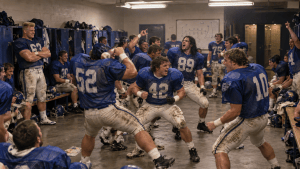
Mid-November in Brookings, South Dakota, inside the Jackrabbits Football Locker room.
Not the new state-of-the-art facility you’d find today, but the late-1990s version.
The cold, concrete, uninsulated box that passed for a locker room. The walls felt like ice, the floor was slick with half-frozen mud, and the only warmth came from the flickering fluorescent lights overhead.
Just outside, a thin break of scraggly pine trees stood to the north, offering a meager shield against the shrill, unrelenting wind and fine powder snow howling down from the plains. Even inside, you could feel that wind sneaking under the doors, numbing your feet into near frozen shoes long before you ever stepped onto the field.
Everything felt heavy — our gear, our legs, even our breath hung in the air like smoke. Heads were down. Shoulders slumped. We’d all just spent the last 55 minutes in a trailer house reviewing the practice from the equally bleak day before.
Everyone was thinking the same thing: Why are we out here?
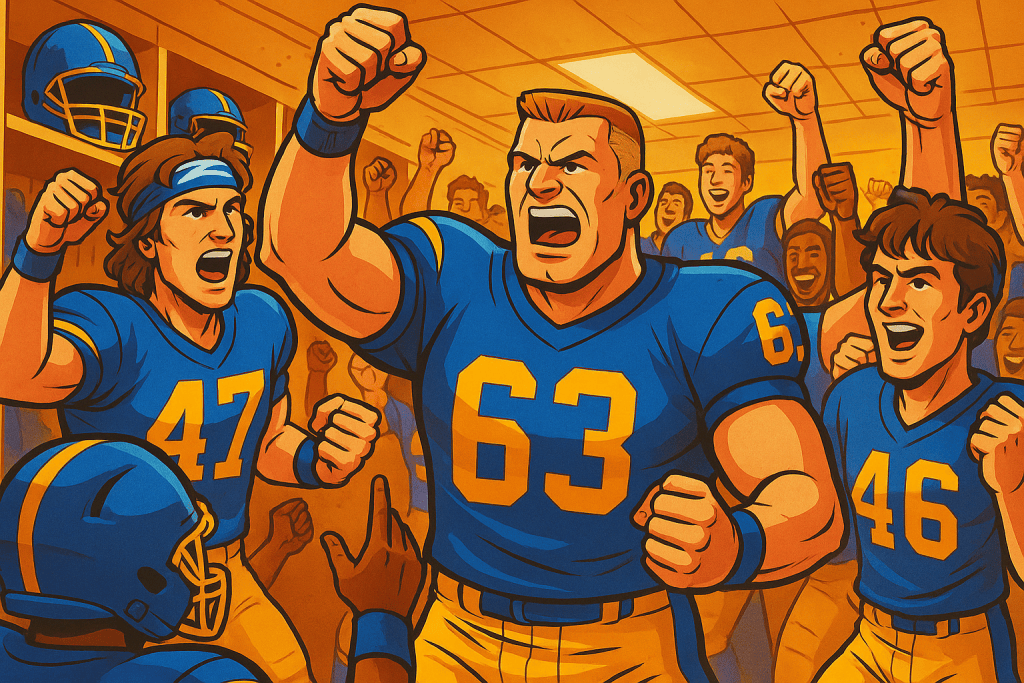
Then it happened. One of our captains, a hulking presence who’d go on to All-Pro fame as a Guard for the Packers and Rams, suddenly slammed his hands onto a teammate’s shoulder pads, jolting him upright. His voice exploded into the stale air, echoing off concrete walls:
“It’s time for some FE, boys! FE, let’s go!”
For a heartbeat, there was stunned silence. Then a few reluctant smiles cracked through the gloom. Some heads began to nod understandingly.
A voice from across the locker room answered back in a singsong style
“That’s right, time to get some FE up in heeeeere today!”
The spell was broken. The energy became contagious. Slowly, more heads lifted. Someone cranked the stereo louder, the bass rattling the old metal lockers. Mesh doors started to clang in rhythm as players smacked them with open palms. Hands clapped. Voices raised. Laughter broke out, bouncing around the narrow corridors. The thick, frozen air turned electric.
A coach, catching wind of the commotion, popped his head into our section, eyes wide, grin splitting his face:
“That’s right! Let’s bring a little of that FE today, boys!”
As quickly as he appeared, he slipped back out. The energy didn’t fade, it grew.
Slowly, the shouts of FE and the surge of manufactured enthusiasm rolled outward, creeping into the adjoining locker room. Soon both sides of the facility were alive with noise. You could hear players pounding lockers, shouting each other’s names, daring the cold to sap their spirit. What started as a spark in one corner became a rolling wave of movement and determination, a chorus of defiance against the cold and fatigue.
What began as forced noise, an awkward, deliberate attempt to stir something inside, erupted into genuine, electric excitement. By the time we finally poured out of the locker room onto the frozen practice field, FE had transformed into RE — Real Enthusiasm. It was no longer pretend; it was real, tangible, unstoppable.
The Birth of FE
As far as I know, FE, False Enthusiasm was born right there in Brookings, South Dakota, invented by the South Dakota State Jackrabbit football team of the 1990s. And while there are certainly similar traditions across this great nation, the term “FE” — and the brutally honest practice of openly calling it what it is — started in that cold, cramped locker room.
The Science of FE
FE isn’t about faking happiness or ignoring adversity. It’s about manufacturing positive energy when none exists.
When you generate FE, you’re using your body to prime your brain. Loud claps, shouts, and movement send signals that trigger adrenaline, increase heart rate, and sharpen focus. This creates a neurophysiological loop: the brain senses the body’s intensity and responds by amping up the mind’s readiness. Forced energy turns into real energy because the nervous system can’t always tell the difference between what’s spontaneous and what’s deliberate.
It’s not superstition. It’s science.
From FE to RE
On that day, and countless others – we forced it.
We made FE loud, physical, and impossible to ignore.
And as the team poured out of the locker room onto the frozen practice field, you could feel the shift: FE had transformed into RE — Real Enthusiasm. It wasn’t pretend anymore; it was authentic, contagious, and unstoppable. We created the ability and more importantly, the will to get it done in the perfect performance mindset.
This is what the next level looks like.
This is what elite athletes do when circumstances beg them to give up.
They manufacture the energy they need, and turn it into something real.
The Precision Performance Lesson
Elite performance isn’t just about physical talent. It’s about mindset, emotional control, and the ability to generate intensity when every excuse says you shouldn’t. FE teaches us that you don’t have to wait for motivation. You can create it, on demand.
And when you do, you unlock a secret weapon that will carry you.
There are many things that elite athletes do that make them…not amateurs.
Hopefully sharing FE, gives you one more tool to add to your toolbox.
Dr. Chad Peters is the founder of Precision Performance Concepts and FE is mentioned in his latest book, “Unlocking Athletic Potential – A Coach’s Guide to Peak Performance.”
FE comes at the end of the book in the chapter about positive mindset that Peters describes as the most important concept for creating WINS –
“The Unbreakable Mind: Forging Champions Beyond the Physical”